Houseplants on summer vacation? Time to bring them back inside

by David R. Clark, CNLP If your houseplants have been outside this summer, start preparing now to move them indoors. Here are some of my tips to get them ready for the move. When to move houseplants inside Move your houseplants to a shady place outside for one to two weeks to get them acclimated to the lower indoor lighting conditions. Bring your houseplants inside before you turn on your furnace. If the plants are outside in cool daytime temperatures,…...

Monthly Subscription Membership Required

You must be a Monthly Subscription member to access this content.

Join Now

Already a member? Log in here
monarch caterpllar

Neem oil can harm beneficial insects; see more in WNY Gardening Matters

Neem oil is used as a pesticide. However, just because neem oil is organic doesn’t mean it is totally safe. It can harm beneficial insects, according to an article in WNY Gardening Matters. “Don’t be confused by the ‘organic’ label,” said writer Lyn Chimera. “Remember—nicotine is also natural.” Read more in “Neem Oil: Friend or Foe?” Other recent articles in WNY Gardening Matters include:…...

Monthly Subscription Membership Required

You must be a Monthly Subscription member to access this content.

Join Now

Already a member? Log in here
adult spotted lanternflies

Report spotted lanternfly in WNY before it spreads

The spotted lanternfly (SLF) is an invasive species that feeds on on 100 different plant species including grapes, hops, maple trees and other woody plants. It could be a problem for your landscape, but it’s an even bigger issue for agriculture, especially in our grape-growing region, and could pose a severe threat to our natural resources. The SLF has been found in Western New York, and we want to get rid of it before it spreads. You can help by reporting any…...

Monthly Subscription Membership Required

You must be a Monthly Subscription member to access this content.

Join Now

Already a member? Log in here
slug trap in Cheektowaga NY

Slug traps: Effective & easy to make

by Connie Oswald Stofko “With the rain and high humidity, it’s been a bountiful year for slugs,” said Lyn Chimera of Lessons from Nature. Many gardeners aren’t happy that the slug population has increased; slugs can injure plants by chewing holes in the leaves and stems. (See photos of damage on this page from Cornell College of Agriculture and Life Sciences (CASLS). Find more information about dealing with slugs and snails on that page, too.) One way to deal with slugs…...

Monthly Subscription Membership Required

You must be a Monthly Subscription member to access this content.

Join Now

Already a member? Log in here
bumblebee flying to blossom on nepeta, copyright by Connie Oswald Stofko

What does this hot summer mean for WNY gardens?

by Connie Oswald Stofko “This year seems to have been running ahead of schedule from the beginning,” said John Farfaglia, extension educator with Cornell Cooperative Extension in Niagara County. “We had a mild winter, early spring and and early summer.” And summer has been hot! What does this mean for our gardens now? Tomatoes and other food plants With the higher temperatures we’ve had, your tomato plants and other vegetable plants may have started fruiting earlier than usual, Farfaglia said…....

Monthly Subscription Membership Required

You must be a Monthly Subscription member to access this content.

Join Now

Already a member? Log in here
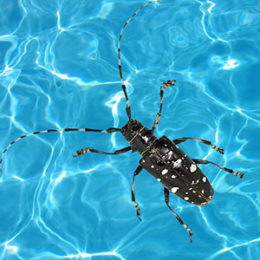
Asian longhorned beetle in pool

Just in case: look for Asian longhorned beetle

by Connie Oswald Stofko The Asian longhorned beetle, an invasive insect, has been a problem in the New York City area. The good news is that it has been eradicated in some of those areas, according to the New York State Department of Environmental Conservation. We hope that the ALB isn’t in Western New York, but we have to be on the lookout in case it is. It’s important to identify it immediately so we can control its spread and…...

Monthly Subscription Membership Required

You must be a Monthly Subscription member to access this content.

Join Now

Already a member? Log in here
Japanese beetle with winsome fly eggs

How to deal with Japanese beetles in Western New York

by Connie Oswald Stofko It’s the time of year when Western New York gardeners may be finding Japanese beetles in their gardens. If you have Japanese beetles, you will see them; they’re easy to spot. About half an inch long, they’re big enough to see, plus their coloration catches your eye. They are green and copper, and they’re shiney. The damage they do may catch your eye as well. They feed on rose petals— and on about 300 other kinds…...

Monthly Subscription Membership Required

You must be a Monthly Subscription member to access this content.

Join Now

Already a member? Log in here
DEC staff member wearing protective equipment next to adult giant hogweed plant.

Good news & bad news with giant hogweed in WNY

by Connie Oswald Stofko The bad news: Giant hogweed is a nasty invasive plant that can cause severe burns on your skin if you touch it. The good news: In many areas of New York State, giant hogweed has been eradicated. The bad news: Western New York has the most giant hogweed in the state. The good news: If giant hogweed is on your property, you can get advice on what you should do. Even better, staff from the Department…...

Monthly Subscription Membership Required

You must be a Monthly Subscription member to access this content.

Join Now

Already a member? Log in here
other path at Jen Weber's gardens

Nothing like an outdoor wedding to jumpstart a backyard makeover

by Connie Oswald Stofko Jen and Joe Weber moved their family into their new home three years ago. When they got there, they found that the previous owners had planted bishop’s weed (also called goutweed), a nasty, very aggressive plant that spreads easily and is hard to get rid of. The bishop’s weed is still there, stretching 66 feet along one side of the house. Other projects, such as fixing “the path to nowhere,” haven’t been started yet, either, and…...

Monthly Subscription Membership Required

You must be a Monthly Subscription member to access this content.

Join Now

Already a member? Log in here
trees with white pine needle disease

Look now for tree disease & tree stress

Spring is a good time to check your trees for any signs of stress or disease, according to the New York State Department of Environmental Conservation (DEC). If you have questions about your trees, email photos and location information to foresthealth@dec.ny.gov or you may contact the Forest Health Diagnostic Lab at 1-866-640-0652. Tree diseases Oak wilt  Don’t prune oak trees in spring! This is the time when insects that spread the oak wilt fungus are on the move. Because of recent oak…...

Monthly Subscription Membership Required

You must be a Monthly Subscription member to access this content.

Join Now

Already a member? Log in here