


By Sally Cunningham
Whether we use our eyes or our backs, autumn is a busy time for plant and nature lovers. I strongly suggest getting out there for leaf-peeping, nursery browsing, bulb planting, and garden care—including getting houseplants and tropicals inside.
The perennial and shrub garden
First, look around! During September and much of October (depending on, you know… things like frost and snow), the flower show in our gardens couldn’t be more spectacular. That is, if you chose perennials and shrubs for late summer/early fall color.
Sadly, many people do not choose these plants. Why? When the annual virus called Spring Fever forces crowds into garden centers, folks lust for and buy what they see flowering. The perennials and shrubs that will be blooming in September just look like boring green clumps in a pot.
The solution is to browse garden-center and nursery aisles, and to see as many gardens as you can—now. Accept invitations from gardening friends, including Gardens Buffalo Niagara gardeners! Take notes in garden centers when you see the plants that are showing off. The businesses will be storing them soon, so get there quickly. You may even take some home. Woody plants (shrubs. trees) can be transplanted easily now with proper (wide) holes, soil, and watering in. After all, most will be living outside in the cold all winter in their nursery homes.
It gets a bit riskier to plant and over-winter many perennials in October. But you can succeed if you choose substantial plants with good root balls, create beds with some protection, and water until the soil freezes. I’m still planting treasures this week.
Gorgeous now

Perennial gardening is like raising children—everything changes so fast! My August show was daisies, Rudbeckia and Echinacea cultivars, native Monarda (bee balm), Vernonia (New York ironweed), Veronicastrum (Culver’s root), and late daylilies. They mostly finished performing (or were beaten down by rainstorms). But suddenly the landscape filled with spectacular Hibiscus syriacus (rose of Sharon), Hibiscus moscheutos (hardy hibiscus), a mass of Cleome (turtlehead), obedience plant (mine are pink), hardy begonias, toad lilies, and Japanese anemones.
Panicle hydrangeas (too many to name) keep going spectacularly, and the Callicarpa (beauty berry) is bursting. Soon the deep blue Aconitum napellus (monkshood, which is poisonous) will dazzle just when blue color is rare.
Meanwhile, the field is stunning with varieties of purple asters, goldenrods, and all kinds of berrying trees and shrubs that keep birds happy. My favorite flowering tree this season is Heptacodium (seven son flower) with great bark and—unexpectedly—white flowers and red calyces from late summer on.
WNY trees show fall color as dramatically as anywhere in the country, and leaf-peepers can find many routes and trails for viewing. To study what your own landscape may be missing, see Draves Arboretum this month for the panorama of woody plants (including native and miniature collections) that grow in normal Western New York conditions. (Contact them at 585-547-3341 for hours and admission.)
“There really is no choice about saving one group of plants: the houseplants we put outside for their version of summer camp.”
Decide what to save
A timely and sometimes painful decision now is what plants you can over-winter, and which ones to let go. Many gardeners save favorite annuals—Pelargoniums (geraniums), Coleus, Impatiens, and Lantana—in the house or basement. Just get them inside well before a frost, ideally when the inside temperature is not much different from the outside temperature.
Tropical bulbs or tubers including dahlias deserve and require special handling. Cannas are easy to dig up, brush off, divide, and store in a basement.
Find how-to advice on all the above and more from online science-based sources suitable for our region, such as your county’s Cornell Cooperative Extension.)
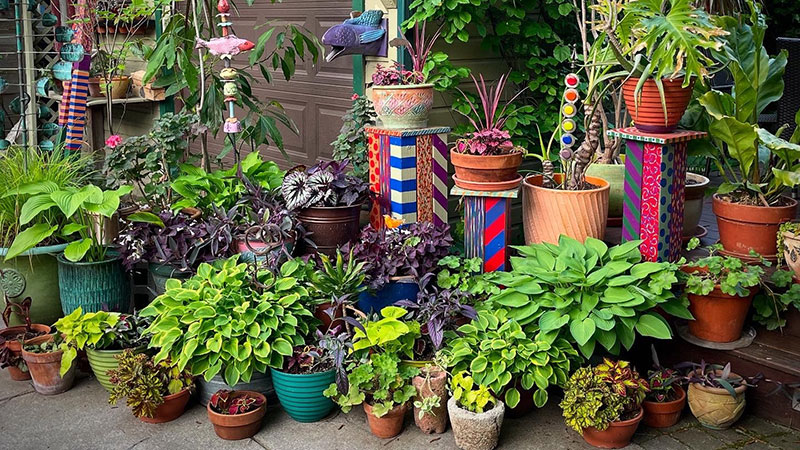


There really is no choice about saving one group of plants: the houseplants we put outside for their version of summer camp. They want in, with varying levels of urgency, preferably before nights are in the 40s. The less you shock them—from cold outside to heated inside—the better. (Ficus plants notoriously panic in response to change, and drop all their leaves.)
How much to groom them first? I admit to being more casual than many gardeners, and have not had big problems. I simply look plants over for any signs of insects, brush off the dropped foliage and other debris from on top of the pots, and check the bottom of the pot for pill bugs (“potato bug”) and others.
In rare cases, an insecticidal soap or Neem oil might be called for—or just isolate a troubled-looking plant for a while. Pruning or clipping (dead flowers, off-color leaves, and sprawling branches) often helps, if primarily for size reasons. (I once bought a grocery store six-inch Norfolk Island Pine that is now six feet tall. It’s a great Christmas tree, even when I must cut back the top to get it in the door.) Provide your incoming houseplants with the best light you can, cool temperatures (at least at night), stop fertilizing, and don’t over-water.
Use the leaves
You may remember an old joke about God being shocked to see suburbanites throwing away his good leaves and grass (as in raking them to the curb), and later buying compost and mulch to add to the soil! I’d like to reassure the deity that Buffalo gardeners know they can use their leaves, twigs, and lawn clippings directly on their garden beds! Mulch holds in soil moisture, blocks weeds, and decomposes, adding organic matter to the soil. (If you have large leaves, like oak, chop them up with the lawnmower before spreading them.)
Depending on the rules where you live, you may be able to pile leaves and cuttings (a modified compost heap) in a back corner, or bag and store them for the next season. In cities and some suburbs, where rats may be, you cannot make composts that include food waste. (For food composting, look into municipal composting sources—there’s a way!)

Sally Cunningham is a former Master Gardener, Cooperative Extension Educator, garden speaker, Buffalo News and Buffalo Spree writer, and author or co-author of several books, including Great Garden Companions (Rodale) and Buffalo-Style Gardening (with Jim Charlier, St. Lynn’s Press).
