Comeback kids: perennials we love

By Lauren Newkirk Maynard In my shade-loving, woodland-ish city yard, perennials rule. The plants popping up every year, and sometimes every other if biennial, delight me with their determination and consistency.  Perennials can be workhorses in the garden, battling climate change, drought, soggy rain and certain pests (deer and rabbits, we see you). They can be grown in all levels of sun and shade, and provide blooms for cut arrangements or interesting foliage in shady spots. They can also help…...

Monthly Subscription Membership Required

You must be a Monthly Subscription member to access this content.

Join Now

Already a member? Log in here
bumble bee on Joe Pye weed in Amherst New York

This month in the garden: June

On checking temptation, hitting thugs where they hurt, and above all, enjoying your patch of heaven. By Peggy Koppmann I saw a quote recently that said, “I garden, therefore I am.” With apologies to Descartes, I believe that to be true for gardeners. As June arrives, acts of gardening are part of our very existence. We plan and plant to feed our families, to support pollinators, to sustain our environment, and to create beauty. We are the face of resistance…
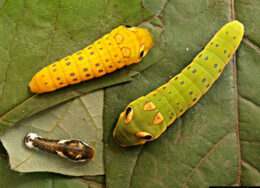
swallow tail caterpillars on spicebush leaves

Sassafras & spicebush trees are at risk; how you can help

Two native species of trees, sassafras and spicebush, are at risk of an invasive fungal disease called laurel wilt. The disease has been detected on Long Island. It’s the first detection of the disease in New York State. Note: Mountain laurel, despite its name, is not in the same family and isn’t impacted by the disease. Also, spicebush is relatively small; it can be grouped as a shrub or as a small tree. The groups working on this are: Why we don’t want…

brown marmorated stink bug near window

This bug is ugly, stinky & annoying, but not a problem in WNY

by Connie Oswald Stofko I’ve been seeing a lot of brown marmorated stink bugs this past week: hiding inside the umbrella on my patio table, hanging onto the outside of my window screens and walking around inside my house. They’re fairly big (the size of a fingernail) and very ugly (like a creature from a horror movie). Plus, when they get aggravated or killed, they stink. If you aren’t familiar with the brown marmorated stink bug, don’t be worried. When…...

Monthly Subscription Membership Required

You must be a Monthly Subscription member to access this content.

Join Now

Already a member? Log in here
beech leaf disease

Look for invasive species & you might win a prize

You can help our environment by looking for invasive species through the NY iMapInvasives Annual Mapping Challenge. Learn more and find out how to participate at the NY iMapInvasives website. The top individual data contributors and Partnership for Regional Invasive Species Management regions will also receive special prizes from the New York Natural Heritage Program.  Some of the species in the challenge are data gap species. Data gap species are: If you look at a map of all the data for one…...

Monthly Subscription Membership Required

You must be a Monthly Subscription member to access this content.

Join Now

Already a member? Log in here
illustration of diseased tree

Sick tree? Get help for free

The Forest Health Research Lab is available year-round to help your tree health problems at no cost. This isn’t just for forests; you can ask questions about pests or diseases for a few trees or a single tree. The folks at the research lab can identify the problem and provide recommendations. Start by submitting a report form. The more information you provide, the easier it will be for them to identify the problem and help you find a solution. They will…...

Monthly Subscription Membership Required

You must be a Monthly Subscription member to access this content.

Join Now

Already a member? Log in here
Asian longhorned beetle in pool

Just in case: look for Asian longhorned beetle

by Connie Oswald Stofko The Asian longhorned beetle, an invasive insect, has been a problem in the New York City area. The good news is that it has been eradicated in some of those areas, according to the New York State Department of Environmental Conservation. We hope that the ALB isn’t in Western New York, but we have to be on the lookout in case it is. It’s important to identify it immediately so we can control its spread and…...

Monthly Subscription Membership Required

You must be a Monthly Subscription member to access this content.

Join Now

Already a member? Log in here
Japanese beetle with winsome fly eggs

How to deal with Japanese beetles in Western New York

by Connie Oswald Stofko It’s the time of year when Western New York gardeners may be finding Japanese beetles in their gardens. If you have Japanese beetles, you will see them; they’re easy to spot. About half an inch long, they’re big enough to see, plus their coloration catches your eye. They are green and copper, and they’re shiney. The damage they do may catch your eye as well. They feed on rose petals— and on about 300 other kinds…...

Monthly Subscription Membership Required

You must be a Monthly Subscription member to access this content.

Join Now

Already a member? Log in here
DEC staff member wearing protective equipment next to adult giant hogweed plant.

Good news & bad news with giant hogweed in WNY

by Connie Oswald Stofko The bad news: Giant hogweed is a nasty invasive plant that can cause severe burns on your skin if you touch it. The good news: In many areas of New York State, giant hogweed has been eradicated. The bad news: Western New York has the most giant hogweed in the state. The good news: If giant hogweed is on your property, you can get advice on what you should do. Even better, staff from the Department…...

Monthly Subscription Membership Required

You must be a Monthly Subscription member to access this content.

Join Now

Already a member? Log in here
lesser celandine in Amherst NY

Lesser celandine: spread the word about this horrible plant in WNY

by Connie Oswald Stofko Gardeners in Western New York have the opportunity to address the problem of lesser celandine. That’s because lesser celandine is right in our own backyards. Or front yards. Or the lawns and gardens of our neighbors. If you don’t know what lesser celandine is, read on. And if you are already familiar with this invasive plant, please tell others. Tip: Our weather has been warm, and lesser celandine may be coming up sooner than it has…...

Monthly Subscription Membership Required

You must be a Monthly Subscription member to access this content.

Join Now

Already a member? Log in here