

Tonawanda gardener Lindsay Dzielski shares her passion for outdoor play
By Lauren Newkirk Maynard
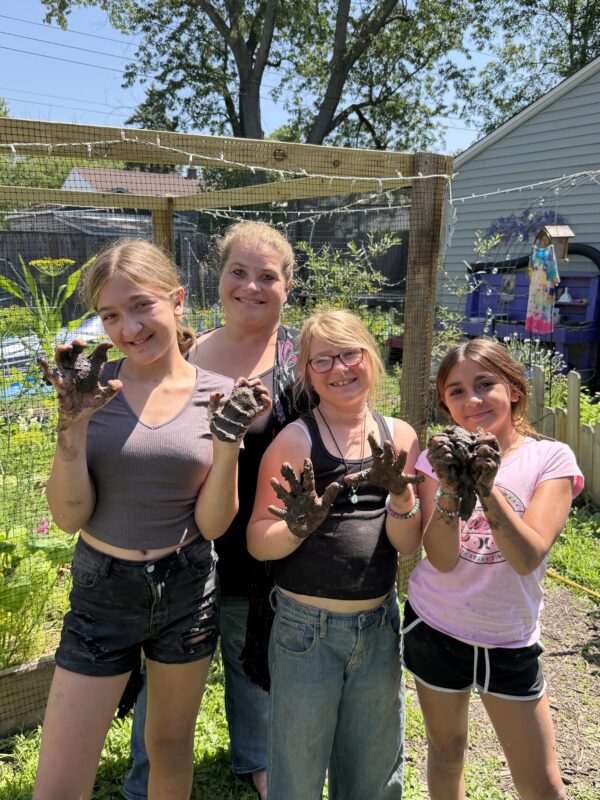
Lindsay Dzielski is proud of her bursting Tonawanda garden. In 2009, she and her husband Timothy bought the house and slowly began building raised beds and planters, using trial and error to learn the best ways to grow organic produce, medicinal plants, berries, herbs, and flowers.
“It really took off in 2020, when we had more time to garden during the pandemic,” says Dzielski, founder of Kids Need to Play and play coordinator for City of Tonawanda United, a grassroots non-profit hosting public events including an annual plant swap and a monthly pop-up playground for kids held at Niawanda Park.
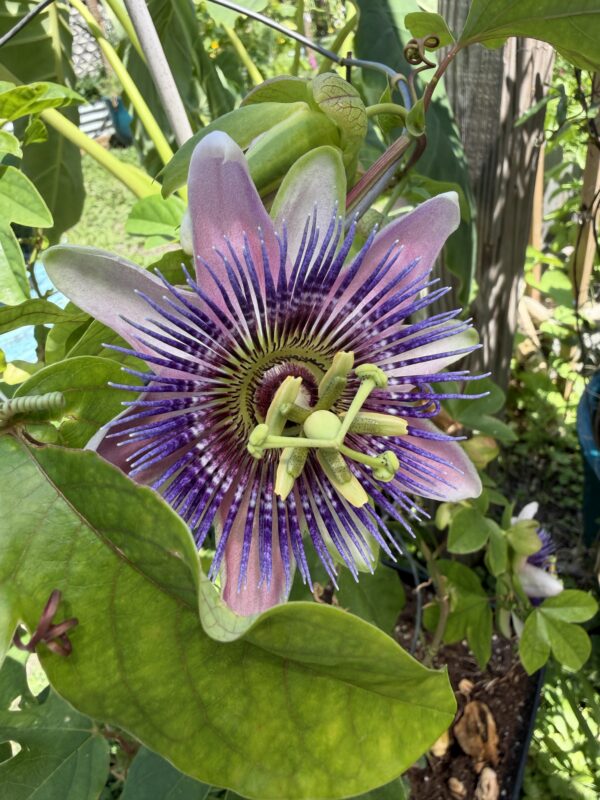
The Dzielskis also built a huge “catio” for their cats, a pond for turtles and frogs, and raised beds of bright flowers, including Lindsay’s favorite passionflowers.
Their open, sunny property lies half a mile from a former Manhattan Project dump site, so Dzielski elevated the garden beds and uses lots of containers to keep edibles clear of possible contamination.
There’s also an extensive mud kitchen along the garage with running water and flower beds where her kids and their friends experiment and get dirty. Dzielski says she wanted them to know where their food comes from, how to grow and prepare it, and to appreciate the time and care it takes to be a food gardener in their own backyard.
What prompted you to start this garden project?
We started the garden so we had control of what was used on our food. I wanted clean, truly organic foods for my growing family, and I wanted to grow medicinal herbs for us as well. We specifically use raised beds because, as with many places locally, our surrounding soil has been contaminated over the years by choices made 50 odd years ago. We have the Manhattan Project buried about 1/2 mile away, as well as old batteries that were dumped on top of that. We wanted to make sure our food was able to grow in clean soil. The first few years, it was a failure; the surrounding wildlife had more success with our vegetables than we did. But over time we developed a system that works with the wildlife.
“Bringing back outdoor, child-led play is as important as producing safe, healthy food for my family.” —Lindsay Dzielski
What kinds of things are you growing? Any special reason for them?
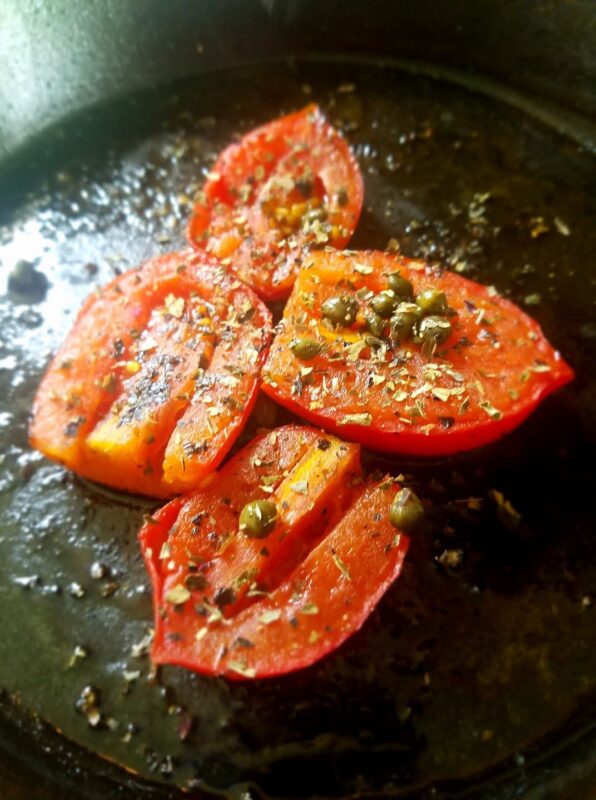
My son will not eat fruit unless he picks it. He is autistic and also extremely picky with foods. So the berries are grown because I know he will go into the garden to eat them… he might not eat them the rest of the year, but at least in summer months I know he will eat fruit. We also focus on “salsa” veggies. That is something the household eats all year. Roma’s are my favorite to grow for sauce, soup and a delicious slow-cooked roma you place on top of a slice of mozzarella! (See Lindsay’s recipe below.)
What does this project mean to you? Is it about relaxing, about the environment, wanting to grow your own food…?
As much as this garden means I can have clean foods for my family, it is also about teaching my children and their friends about growing their own food and where food comes from and what plants can be used for what. My children know how to harvest as well as preserve the foods. I guess some call this the “granny hobbies,” but it’s skills that are needed, and children need to learn them.
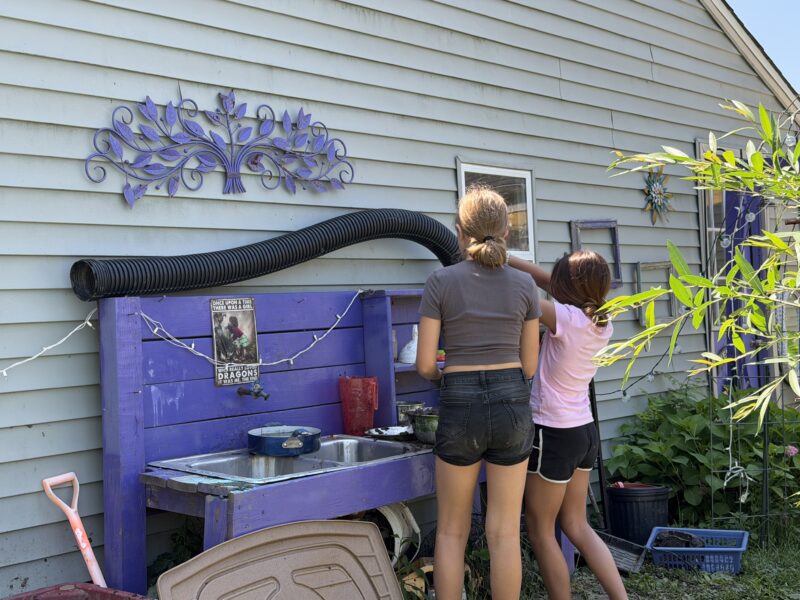
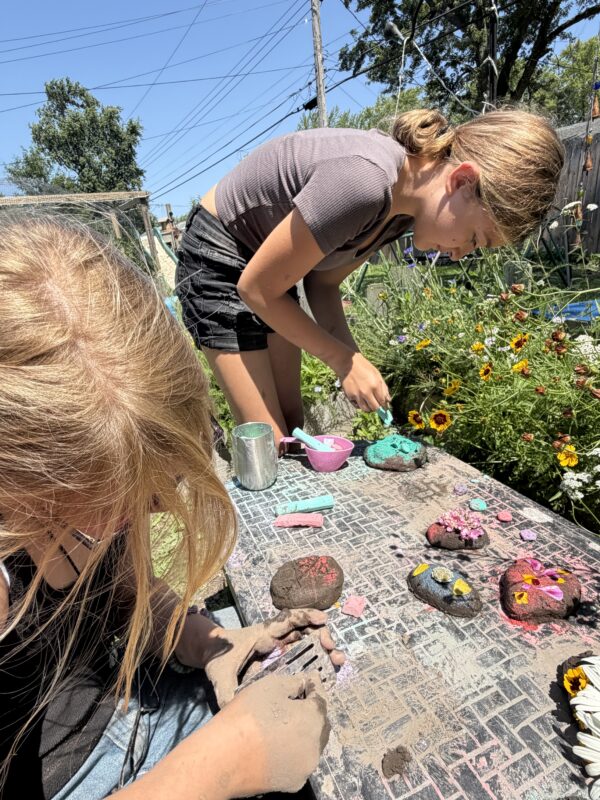
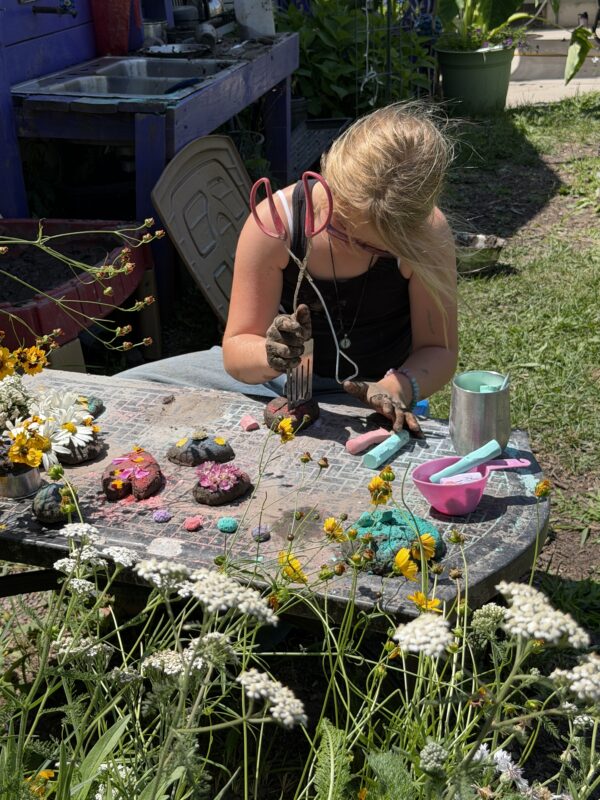
The mud kitchen at Lindsay Dzielski’s garden allows children from all over the neighborhood to gather, play and create outdoors. Photos: Lauren Newkirk Maynard and Jack Maynard
Why a mud kitchen?
Over the last 30 years, we have seen a drastic decline in child-led play. Children are being exposed less and less to outdoor play, to nature and to messy play. The mud kitchen was a priority even before the food. It went from a garbage-picked wooden pallet and some totes of water, to a 6-ft kitchen with running water and an intentional cut garden planted around it for children to use. This allows all the kids (even the teens) to come over and build mud pies, cupcakes and soups with the flowers, sand, mud and nature around them. It allows them to develop their pre-frontal cortex by playing, problem solving, communicating and more through play. Bringing back outdoor, child-led play is as important as producing safe, healthy food for my family.
Urban Farm Day
On August 15th, you can visit the Dzielski’s garden and 19 others during Urban Farm Day, a self-guided tour of Buffalo’s thriving urban farm community.
Organized annually by Gardens Buffalo Niagara, Urban Farm Day provides free access to vegetable gardens, food demonstrations, and educational talks where visitors can learn about different growing methods, soil solutions and fresh produce markets. Kids and adults can pet baby rabbits, see worms in action or join in a nature-themed scavenger search.
To learn more, visit Urban Farm Day online.
Slow-Roasted Roma Tomatoes with Mozzarella
Ingredients:
Olive oil
Roma tomatoes (assume 1 tomato per person)
Fresh mozzarella
Capers
Fresh basil
Salt
Grab your fresh mozzarella and slice into half-inch pieces. Place on a plate. The mozzarella should be roughly the same size for the Roma to sit on.
Take your ripe Roma and slice in half the lengthwise.
Heat a cast iron pan on medium heat.
Use the amount of olive oil that makes you happy so that it coats the bottom of the pan.
Place your halved Romas skin-side down into the oil. Turn heat to low. This works best with a small burner; the goal is to cook long and slow.
Add thinly sliced basil, salt and capers along with some of the caper brine on top of the Romas. Go with what your heart feels to be the right measurement.
Cover for about 8 mins. The romas will start to melt… cook down.
Uncover and continue to slow cook them. Allowing the moisture that was released to cook off.
Cook until the bottom starts to caramelize and turn slightly dark.
Once the bottoms are caramelized, place each halved piece of roma on one slice of mozzarella.
Find your favorite spot in the garden and mangia!
Recipe has been edited for clarity and length.
