


By Peggy Koppmann, CCE Master Gardener Volunteer
It’s a buffet line. The bumblebee squeezes into a hosta bloom, the hummingbirds flit between the Cuphea and the Mandevilla and tiny little pollinators cover the ‘Millenium’ allium. Monarchs cruise the Joe Pye weed, Ageratum, and Tithonia, and the swallowtails hang out in a patch of phlox. There is a noticeable hum in the air as bees swarm the Monarda and Helianthus. Yes, lunch is being served in the September garden.
New rule: Summer does not end at Labor Day!
So, I’m making a new gardening rule: No display of mums before the actual start of fall! You’ll have to wait until Tuesday, September 22 at 8:04–8:05 p.m. EDT. That marks the autumnal equinox in the Northern Hemisphere, after which you may put out mums for display. They will be happier in cooler weather anyway.
Choose healthy plants with lots of buds but few flowers. If possible, carefully transplant them into slightly bigger pots using good potting mix and water consistently. Once they wilt, recovery is difficult. Look for hardy mums next spring and avoid the disappointment.
Doughnuts, anyone?
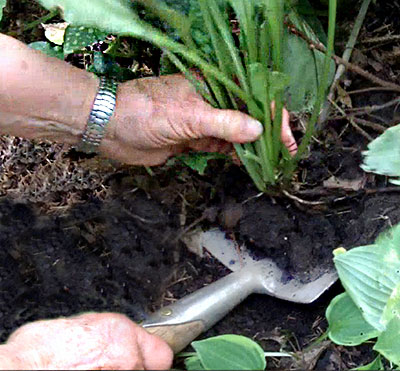
Divide perennials that have developed a bare spot in the middle with healthy growth on the outside of the (doughnut) ring. They may produce fewer flowers, have sparse foliage or just look less vigorous. They may also have gotten too large or overcrowded.
Shasta daisies, asters, Siberian iris, Helenium varieties, and especially grasses are most likely to develop doughnut holes. Check out your copy of The Well-Tended Perennial Garden (Timber Press 2006 and 2017) by Tracy diSabao-Aust for excellent advice on dividing perennials. (A reference that should be on your bookshelf).
You can also check: https://www.epicgardening.com/divide-perennial/ or https://www.finegardening.com/project-guides/gardening-basics/10-tips-on-dividing-perennial-plants
Aster ailments
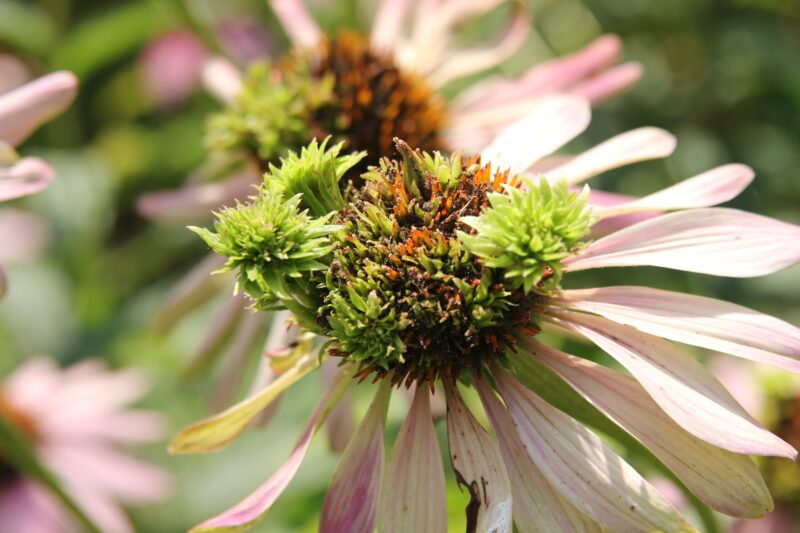
The culprit pictured here is the aster leafhopper, which can transmit tiny organisms called phytoplasma that feed on plant tissue. The result is aster yellows, a disease many gardeners have noted this summer, to their dismay. Yellowing of the leaf veins and blades, spindly stems with pale leave, stunted plant growth and green or deformed flowers are symptoms of the disease. Over 300 species of herbaceous and vegetable crops can be affected. There is no cure. Affected plants should be removed and destroyed to prevent further spread.
Find further information at the Missouri Botanical Gardens website (linked above) and at https://hort.extension.wisc.edu/articles/aster-yellows/
Overseeing overseeding
Bare lawn patches can be addressed in September as the warm soil temperatures and cooler air temperatures provide the best conditions for germination of cool-season grasses. Mow the lawn area short and rake up any debris. Some sources recommend aerating the soil with a garden fork to create holes that allow for seed-to-soil contact or using a dethatcher. Spread seed evenly or use a broadcast spreader. Firm the soil to help seed-to-soil contact and then water gently but consistently until germination.
This is a project that deserves some research and understanding of which cool-season grass is best suited for your site. Cornell’s Turfgrass Management website has researched, in-depth information, so spend some time there before you start: https://albany.cce.cornell.edu/gardening/lawns-ornamentals/sustainable-lawns
Dethatchers, also called scarifiers, can be rented at The Tool Library.
The fall palette
Thinking about adding shrubs and trees to your property this fall? You’ve picked the perfect time to plant, so why not make selections that will make your yard shine with the rich reds, oranges, yellows, and even burgundy of the fall palette? Be sure to consider mature size and site conditions when making your selections.
The traditional sugar maple glows with reds and oranges, while ‘Flamethrower’ dogwood shows off a carnival-like range of fall colors. Stewartia’s dark green leaves turn shades of orange, red, and yellow.
For those of you with lots of room, bald cypress and dawn redwood have needles that glow with gold color before they drop for the winter. In the shrub department, native chokeberry, serviceberry and viburnums all have strong fall colors.
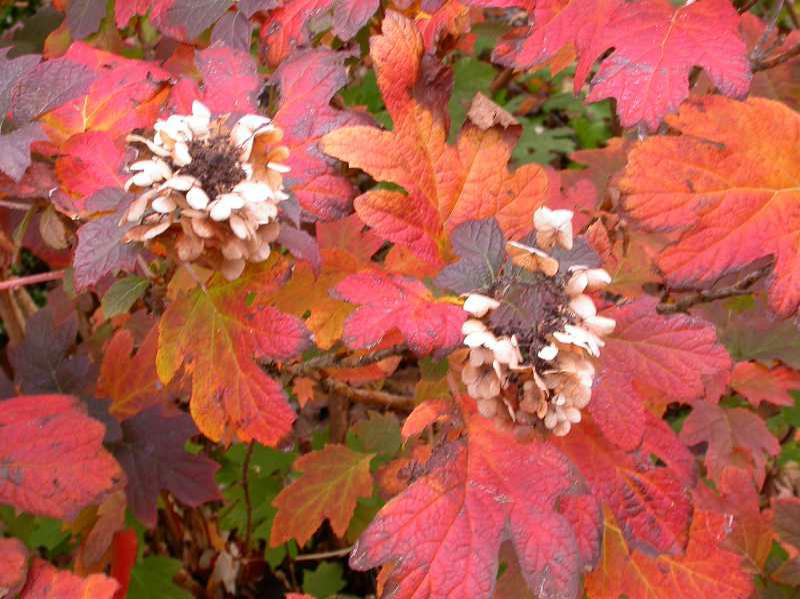
The underused but unique Fothergilla shrub shows off fall colors of gold and orange while oakleaf hydrangea displays deep reds and even burgundy. Do your homework to find the plants that will bring the traditional warm colors of fall to your garden.
And then…
Keep watering; clean up dropped fruit; repot houseplants if needed; keep weeding; check out late season perennial sales; prune climbing and rambling roses; sow parsley, radishes, lettuce; keep strawberry beds weed free; keep harvesting; watch nighttime temperatures to decide when to bring houseplants inside; leave some seed heads to develop for collecting; clean out dead or diseased branches; cut back fruited raspberry canes; plant spinach and garlic; pot up herbs to bring inside; pinch off tomatoes that are too small to ripen; find your apple crisp recipe and go buy some LOCALLY GROWN apples. Oh yeah, only real whipped cream will do here, none of that chemical stuff.
Peggy Koppmann is a Cornell Cooperative Extension Master Gardener Volunteer and a longtime contributor to CCE Erie’s newsletter, Gardening Matters (and to this website).

No comment
Subscribe