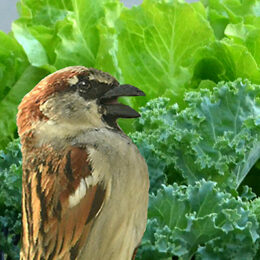
illustration of sparrow eating lettuce and kale

Help a reader: birds eating lettuce

by Connie Oswald Stofko I received this question from a reader: Just wondering if anyone else has had sparrows eating their lettuce, Swiss chard or other greens. I planted a second crop fairly recently in planters and the sparrows act as if they are at a salad bar. They aren’t eating the seeds, just the leaves, picked them to pieces! I’ve just recently covered them with old windows that I use for cold frames and am hoping this stops them. I…...

Monthly Subscription Membership Required

You must be a Monthly Subscription member to access this content.

Join Now

Already a member? Log in here
squirrel closeup for featured image by Stofko

Squirrel tips:How to keep them from digging up your potted plants in WNY

by Connie Oswald Stofko We’re getting into the time when squirrels start to store acorns for the winter. I don’t mind when the squirrels stash their hoard in my lawn, but I do object when they dig up a container that holds perennials. Here’s a tip from Lyn Chimera of Lessons from Nature: To keep squirrels and chipmunks from digging up potted plants, cover the top of the soil with a layer of pea gravel after the container is planted…....

Monthly Subscription Membership Required

You must be a Monthly Subscription member to access this content.

Join Now

Already a member? Log in here
caterpillar of gypsy moth

Did caterpillars eat leaves on your tree? What you can do now

Do you have trees in your yard that were defoliated during the gypsy moth caterpillar outbreak this year? Here’s what you need to know. Outlook for your tree Most healthy trees can withstand a couple years of leaf loss from caterpillar damage, according to the New York State Department of Environmental Conservation (DEC). Long-term damage depends on the type of tree as well as how much defoliation took place. Hardwoods  A healthy leaf-bearing tree should have grown new leaves by now, though leaves…...

Monthly Subscription Membership Required

You must be a Monthly Subscription member to access this content.

Join Now

Already a member? Log in here
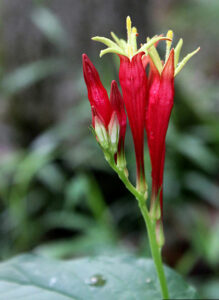
Spigelia marilandica or Indian pink

A cool perennial & more from WNY Gardening Matters

Master Gardener Lyn Chimera introduces us to a perennial with a pretty red and yellow flower called Spigelia marilandica or Indian pink in the newest edition of WNY Gardening Matters. While not native to Western New York, Indian pink is native to the southern United States. “This is a wonderful, unusual and pest-free plant,” Chimera wrote. “Hummingbirds love it, deer don‘t and it’s beautiful too!” It also attracts hummingbirds. “What’s not to like?” she wrote. See the whole article here…....

Monthly Subscription Membership Required

You must be a Monthly Subscription member to access this content.

Join Now

Already a member? Log in here
cucurbit downy mildew on leaves in New York State

Downy mildew is affecting cucumber, melon, pumpkin, squash in WNY

by Connie Oswald Stofko If you’re having trouble with your cucumber, melon, pumpkin or squash this year, you’re not alone. A disease called cucurbit downy mildew (CDM) has already been identified in Erie, Niagara, Orleans, Genesee, Wyoming and Cattaraugus counties. This map shows the spread of CDM. Chautauqua County and Northern Pennsylvania expect to see the disease soon. Cornell Cooperative Extension in Chautauaqu County would like gardeners to send in samples of suspected cases of CDM. (See more below.) Unfortunately,…...

Monthly Subscription Membership Required

You must be a Monthly Subscription member to access this content.

Join Now

Already a member? Log in here
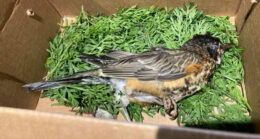
robin died from mysterious disease

Mysterious bird deaths—stop feeding birds for now

by Connie Oswald Stofko Sick and dying songbirds have been showing up from Florida to Pennsylvania with strange symptoms: crusty eyes, blindness and headshaking. Birds may be found on the ground, disoriented and unresponsive.  This has been labeled a “mortality event”– where a large number of animals die within a short period of time due to what appears to be a similar cause. No affected birds have yet been reported in Western New York, but one was found on July…...

Monthly Subscription Membership Required

You must be a Monthly Subscription member to access this content.

Join Now

Already a member? Log in here
dandelions in lawn

Dandelions can produce clones & more from WNY Gardening Matters

Dandelions can produce clones, according to an article by Carol Ann Harlos in WNY Gardening Matters. These common plants can use a process called apomixis, which is asexual reproduction without fertilization. The plants produced are identical to the parent plant. Read more here. Other new articles are: Article 161: Adapting Gardening to Your Physical Needs Article 163: Gardener Assistance with Monitoring Downy Mildews Affecting Cucurbit Plants and Basil Article 164: Pollen  WNY Gardening Matters is produced by the Master Gardeners…...

Monthly Subscription Membership Required

You must be a Monthly Subscription member to access this content.

Join Now

Already a member? Log in here
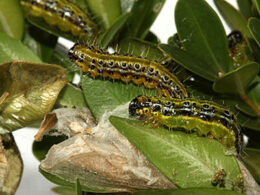
box tree caterpillar

New threat to boxwoods! Look for box tree moth now in WNY

Don’t let a new invasive insect get established in Western New York. The box tree moth is an invasive pest that can significantly damage—and potentially kill—boxwood plants if left unchecked. Boxwood plants imported from Canada this spring could have been infested with the box tree moth. Box tree moths can produce several generations between June and October, so acting now is essential to prevent this pest from establishing itself in Western New York, according to the U.S. Department of Agriculture…...

Monthly Subscription Membership Required

You must be a Monthly Subscription member to access this content.

Join Now

Already a member? Log in here
giant hogweed from NYS DEC

Reminder: Don’t touch giant hogweed or wild parsnip

by Connie Oswald Stofko Now is the time that giant hogweed plants are blooming, making it a prime time to spot this invasive plant, according the New York State Department of Environmental Conservation (DEC). Giant hogweed can cause severe skin and eye irritation, including painful burns and permanent scarring. Getting even a tiny amount of the sap in your eyes can cause temporary or permanent blindness.  The DEC also warns of wild parsnip, which can burn your skin. Giant hogweed…...

Monthly Subscription Membership Required

You must be a Monthly Subscription member to access this content.

Join Now

Already a member? Log in here
stages of Gypsy moth

What to do about increase in gypsy moths

This spring, the New York State Department of Environmental Conservation (DEC) received reports of larger-than-usual gypsy moth populations and leaf damage on trees in the state. Cornell Cooperative Extension in Niagara County found that last year as well. Gypsy moths are non-native but are naturalized, meaning they will always be around. Their populations spike in numbers roughly every 10 to 15 years, but these outbreaks are usually ended by natural causes such as disease and predators. Because of this, DEC and its…...

Monthly Subscription Membership Required

You must be a Monthly Subscription member to access this content.

Join Now

Already a member? Log in here