make rain barrel

See DIY video on how to make a rain barrel; enter to win one

Rain barrels are pretty easy to make, and this video with step-by-step directions makes it even easier. The video was created by the Western NY Stormwater Coalition in partnership with the Central Library of the Buffalo & Erie County Public Libraries. The rain barrel made in the video will be raffled off. To be entered into the raffle, click on the survey link in the Facebook post or go to the survey by clicking here. You can also watch a…...

Membership Required

You must be a member to access this content.

View Membership Levels

Already a member? Log in here
seed packet

If you get seeds in the mail from China that you didn’t order, don’t plant them

If you get seeds in the mail from China or other countries that you didn’t order, don’t open the seed packet and don’t plant the seeds. Consumers in the United States, Canada, Australia and the European Union have been getting unsolicited packets of seeds from China and other countries. The U.S. Department of Agriculture Animal and Plant Health Inspection Service (APHIS) is investigating. At this point, it seems this is a “brushing scam,” where online sellers create fake orders to…...

Membership Required

You must be a member to access this content.

View Membership Levels

Already a member? Log in here
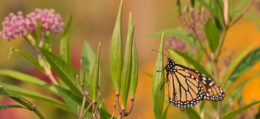
monarch on milkweed

New signs on garden walks, plus why you should try native plants

If you are going to share your landscape on any of our local garden walks, you can pick up a free sign to let visitors know that you use native plants in your landscape. And if you don’t use native plants, read on to see why you might want to add a few. Signs for gardens with native plants Native plants will be highlighted on garden walks this summer in a project organized by Gardens Buffalo Niagara and the WNY…...

Membership Required

You must be a member to access this content.

View Membership Levels

Already a member? Log in here
jumping worm Amynthas

Take part in Invasive Species Challenge; focus is on 4 species

Be a citizen scientist by participating in the NY iMapInvasives team’s 5th Annual Invasive Species Mapping Challenge from June 24 – July 8. Four species will be the focus of this year’s challenge:  Jumping worm Tree of heaven Water chestnut European frogbit You can help map the distributions of these species.  An introductory webinar will be held at 1 p.m. Wednesday, June 24. The webinar will cover the identification of these species and how you can participate. Visit iMap’s website for more information…...

Membership Required

You must be a member to access this content.

View Membership Levels

Already a member? Log in here
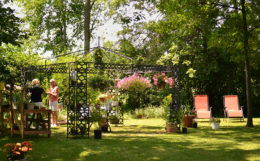
lawn in yard using permaculture

This Grand Island landscape is suburban in front, natural in back

by Connie Oswald Stofko It’s like visiting a home out in the country–depending on what side of the house you’re on. In front, the home of Denise and Don Freedman has a typical suburban landscape. In back, it’s more natural, with fruit trees, a rain garden and trees that were there when they bought the land. They’ve been using permaculture techniques before they ever heard that word. What does permaculture mean to them? “It’s using your land to your advantage,”…...

Membership Required

You must be a member to access this content.

View Membership Levels

Already a member? Log in here
mint by Stofko

Invasive plant or aggressive? There is a difference

by Connie Oswald Stofko What is the difference between an invasive plant and an aggressive plant? Sometimes gardeners use the terms interchangeably, but aggressive and invasive aren’t the same thing. Aggressive plant An aggressive plant is one that spreads faster than preferred, or into an area of your garden where it is unwanted, according to the Chicago Botanic Garden. But what one gardener views as an aggressive plant might not be viewed that way by another gardener. As the Chicago…...

Membership Required

You must be a member to access this content.

View Membership Levels

Already a member? Log in here
don't use lawn fertilizer with phosphorus

Keep our waterways clean: look for zero on lawn fertilizer

Do you like swimming or fishing or clean water in general? Then help our lakes, rivers and creeks by not spreading phosphorus on your lawn. If you fertilize your lawn, look for a bag with a zero in the middle. Fertilizer labels have three numbers. The number in the middle is the percentage of phosphorus in the product, such as 22-0-15. Excess phosphorus has made many waterways in New York State un-swimmable and un-fishable, according to the New York State…...

Membership Required

You must be a member to access this content.

View Membership Levels

Already a member? Log in here
white oak (Quercus alba) L. with acorns

Help save life on Earth by planting trees & more; see POLLINATOR

There are things you can do to help save life on Earth, and the newest edition of POLLINATOR is focused on the many ways we can help. POLLINATOR magazine is produced by the Pollinator Conservation Association, a non-profit based in Western New York. One thing we keep hearing about is planting trees, said Lynda Schneekloth in the article “Nature Based Climate Solutions” in the Winter 2020 edition. Schneekloth is professor emeritus at the University at Buffalo and longtime climate, social and…...

Membership Required

You must be a member to access this content.

View Membership Levels

Already a member? Log in here
lesser celandine in yard

Kill lesser celandine before it flowers; look for it now

by Connie Oswald Stofko Don’t wait until you see the pretty yellow flowers. Look for lesser celandine and get rid of it now. If you want to use an herbicide, you must do it now before the plant flowers. Why you should get rid of lesser celandine If you’re not careful, lesser celandine can spread until you have no grass or other plants in your lawn. Even worse, it can spread into wild areas and wreak havoc there. Lesser celandine…...

Membership Required

You must be a member to access this content.

View Membership Levels

Already a member? Log in here
deer in backyard

Don’t feed deer in WNY: It’s bad for them, bad for people & illegal!

by Connie Oswald Stofko If you feed deer in your backyard or at a park, you could be harming them instead of helping them. Bringing deer together at feeding sites increases their risk of contracting communicable diseases, such as chronic wasting disease, from other deer. That’s why the New York State Department of Environmental Conservation (DEC) prohibited deer feeding anywhere in New York State back in 2002. Recently the DEC adopted a new regulation to provide a clearer definition of what…...

Membership Required

You must be a member to access this content.

View Membership Levels

Already a member? Log in here