


Welcome to Western New York’s new growing season
By Lauren Newkirk Maynard
Have you found sour cherries? This year, the crop was affected by late frost in places like Niagara County, shutting down some u-pick operations.
“I was speaking with a grower at the East Aurora Farmer’s Market this past weekend and no one had sour cherries at that time,” says Sharon Bachman of Cornell Cooperative Extension in Erie County.
This spring saw more rain and cooler temps than we typically get. “We were a little ahead [in temperature] in April but cooler temps in May brought us back to the average,” says Bachman, who says our orchards took a hit from spring freezing that damaged blooms and setting fruit, now developing earlier than before.
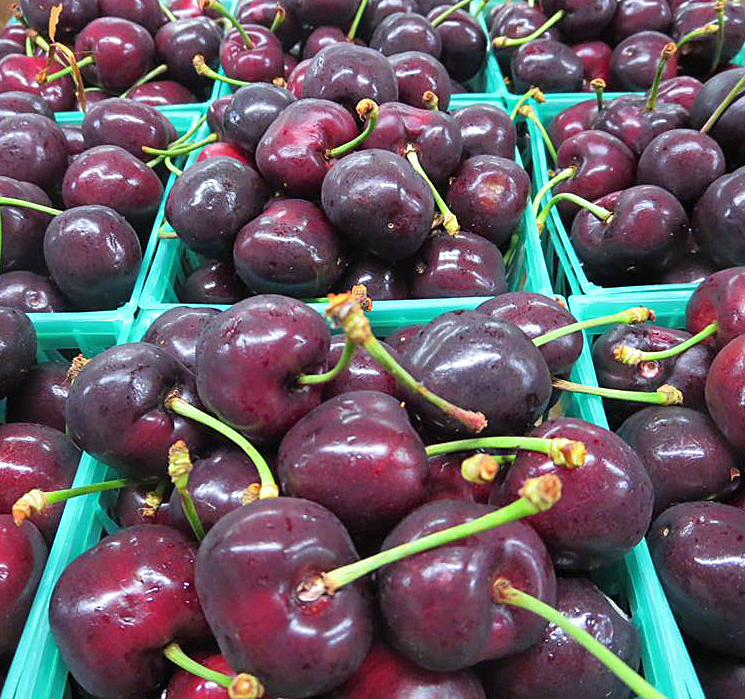
The weather is changing, and with it our growing season. “I remember when cherry season started around mid-July,” says Bachman. This year, local cherries at one of her favorite Chautauqua County orchards were wrapping up before the Fourth.
July in Western New York may bring predictable dry spells, humidity and heat, but what isn’t as predictable is how evolving rainfall and increasing air and ground temperatures are setting up Western New York’s growing season for success or struggle.
Local gardeners must factor how emergent weather patterns, like this year’s prediction of a surging El Niño, play into the mix—or not.
What is El Niño?
El Niño, which means “Christ Child” in Spanish, was a term once used by Peruvian fishermen to describe the warm current arriving in South America during Christmastime. In scientific terms, El Niño and its sister opposite, La Niña, refer to a cyclical weather pattern affecting global weather.
According to the National Oceanic and Atmospheric Association (NOAA), El Niño conditions naturally occur when surface water in the equatorial Pacific becomes warmer than average and east winds blow weaker than normal. El Niños typically appear every three to five years, and most official predictions this year are for a strong to very strong El Niño.
El Niño is getting a lot of attention at the moment, but to get the local scoop, we talked with Bachman and legendary Channel 4 meteorologist, Don Paul.


Left: Meteorologist Don Paul spent 28 years as a part of WIVB’s 4Warn Weather team, serving as chief meteorologist and retiring in 2016. He has since returned to the company on a part-time basis. Image: WIVB. Right: Sharon Bachman is a Master Gardener and agriculture and natural resources educator for Cornell Cooperative Extension, Erie County. Image: CCE Erie.
A soggy start
The oxymoron of a warming atmosphere is that it doesn’t always translate into higher temps season to season (our winters could generally become milder, for instance, accelerating spring growth). But it does hold more water.
Gardeners should watch out for late blight for tomatoes and potatoes and blossom-end rot (which happens when tomato plants dry out). This month and next, make sure to water in the morning to allow plants to dry off, preventing disease, and avoid standing water to control mosquitoes.
Bachman cites Cornell’s Climate Smart website, an online resource for farmers, which states “because of the warming climate, more precipitation is happening in heavy rainfall events (more than 2 inches in 48 hrs), and this trend is expected to continue.”
So hook up your rain barrels if you haven’t already, and catch the downpours while they last. At least our water tables are in good shape.
The wetter spring likely delayed everyone’s planting, but warmer mid-summer temperatures could make crops grow more quickly. If you do succession planting in your vegetable gardens and harvest more than once, then just like the commercial farms, you may see a shorter growing window between harvests.
Although we are still within the USDA’s Plant Hardiness Zones 5b-6b in WNY, and the number of growing degree days “are tracking normal so far,” Bachman says our 15-year average temperatures are warmer and happening sooner than the 30-year average. The Plant Hardiness zones were updated in 2023, and each year is getting hotter than the last.
So the growing season is, well, growing. We may have to adjust when we put out seeds and starts, and cover plants in case frosts sweep in despite the early warmup.
The good news: we may be able to enjoy our gardens further into the fall. “Be prepared to plant cool season crops in August to extend your season,” says Bachman.
Trust short-term forecasts
Don Paul is less concerned about this year’s El Niño while acknowledging the global warming we’re seeing across the United States and in our own region.
Although this year’s El Niño may add to the general warming of the planet, making 2027 “the warmest on record going back to at least 1850,” Paul says, “I know of no evidence of summertime impacts from El Niño on severe weather risks in our region.”
No two El Niños are the same, he warns. According to the models he tracks, our summer may be slightly cooler than the national average in parts of the Northeast and Great Lakes, especially early and late summer, but only if the El Niño is very strong.
So while the rest of the country may be broiling and dry, we could catch a break during those times. Or not: the National Weather Service Climate Prediction Center shows an equal chance of higher or lower precipitation and temperatures for our region through September. As for boots-on-the-ground prediction, Paul notes that even August is still too far out to say with reliability.
“Climate trends are not synonymous with forecasting dealing with natural variability in weather,” he says. “WNY has been warming for decades, though we have been buffered from the worst impacts.”
Lauren Newkirk Maynard is a home gardener still in need of a rain barrel, and editor of Buffalo-NiagaraGardening.com.
