red admiral butterfly

Citizen scientists: Help with BioBlitz on Buffalo’s Outer Harbor

by Connie Oswald Stofko Be a citizen scientist and help the Pollinator Conservation Association with its BioBlitz through Dec. 1 on the Outer Harbor in Buffalo. Help to discover and identify flora and fauna there to improve conservation planning for future projects. The area includes Times Beach, Tifft Nature Preserve, the Union Ship Canal, and all of the Erie Canal Harbor Development Corporation land and State Park land on the Outer Harbor. You can post pictures and observations on INaturalist.org…....

Membership Required

You must be a member to access this content.

View Membership Levels

Already a member? Log in here
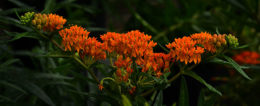
butterfly weed in bloom

New York Flora Atlas offers info & photos on wild plants in WNY

__________ by Connie Oswald Stofko If you want to find out about plants that grow wild in Western New York, check out the New York Flora Atlas. This online resource is a work in progress. It provides information about habitat, taxonomy, native/non-native status and more. (A plant that grows in the wild may be an introduced species and not a native plant.) Images are also being added. There are many ways you can find information. For example, you can search…...

Membership Required

You must be a member to access this content.

View Membership Levels

Already a member? Log in here
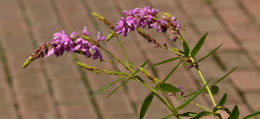
Desmodium canadense or showy tick trefoil

What are the most popular categories of perennials?

by Connie Oswald Stofko What kinds of perennials are most popular with gardeners? Perennials that: That’s from Mischler’s Florist and Greenhouses, 118 South Forest Rd., Williamsville. These categories are so popular that the staff at Mischler’s has grouped perennials from these categories together to make them easier for gardeners to find. There is still time to plant perennials, and many are blooming now! Let’s take a look at an example of one perennial from each group. Attract hummingbirds If you…...

Membership Required

You must be a member to access this content.

View Membership Levels

Already a member? Log in here
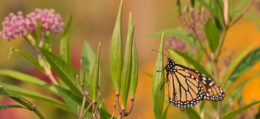
monarch on milkweed

New signs on garden walks, plus why you should try native plants

If you are going to share your landscape on any of our local garden walks, you can pick up a free sign to let visitors know that you use native plants in your landscape. And if you don’t use native plants, read on to see why you might want to add a few. Signs for gardens with native plants Native plants will be highlighted on garden walks this summer in a project organized by Gardens Buffalo Niagara and the WNY…...

Membership Required

You must be a member to access this content.

View Membership Levels

Already a member? Log in here
pussy willow

Advantages of willows that don’t weep, plus more from Master Gardeners

When you think of a willow, you probably think of a weeping willow (Salix babylonica), which originated in China. But if you want butterflies in your garden, you might want to choose native varieties of willow– they support at least 455 species of butterfly larva. Find out more reasons to plant native willows in the article Willows That Don’t Weep by Lynn Chimera. It’s one of the latest articles published in WNY Gardening Matters by the Master Gardeners of Cornell Cooperative…...

Membership Required

You must be a member to access this content.

View Membership Levels

Already a member? Log in here
spiderwort in Buffalo NY

Don’t let names fool you: You may want ‘weeds’ & ‘worts’ in your garden

by Connie Oswald Stofko A weed is any plant you don’t want in your garden. So who would want a plant with “weed” already in its name? And “wort” sounds like “wart,” those unappealing skin blemishes. Yuck! “Wort” is often coupled with the name of some body part —such as in “lungwort.” Double yuck! Don’t be turned off by those names. “Weed” comes from an Old English word for herb. The archaic meaning of “wort”, which has lingered in some…...

Membership Required

You must be a member to access this content.

View Membership Levels

Already a member? Log in here
witch-hazel flowers

Witch-hazel’s fragrant blooms add interest in autumn & winter

If you’re looking for a plant that blooms in your garden now, consider witch-hazel. American witch-hazel (Hamamelis virginiana) is a native shrub that produces fragrant blooms in late fall and early winter, according to the New York State Department of Environmental Conservation. The streamer-like flowers are just starting to appear at this time of year, following the annual loss of the shrub’s leaves. The yellow flowers typically last into December. Since witch-hazel is one of the few plants blooming now,…...

Membership Required

You must be a member to access this content.

View Membership Levels

Already a member? Log in here
bumble bee on goldenrod by Stofko

Identify and help native bees in your garden

Did you know that the native bumble bee is more effective than honey bees at pollinating crops such as tomatoes? That’s just one reason gardeners should care about native bees, according to the Wild Bee ID. Another reason gardeners should care about native bees is that pollinator populations have been declining at alarming rates all across the continent, primarily due to habitat loss and pesticide poisoning.  The makers of the Wild Bee ID app hope that gardeners in North America…...

Membership Required

You must be a member to access this content.

View Membership Levels

Already a member? Log in here

Pretty native wildflowers & more from Master Gardeners

You might want to include Virginia bluebells (Mertensia virginica) or trillium in your spring garden. Find out why in two articles in this month’s edition of WNY Gardening Matters, produced by the Master Gardeners in Cornell Cooperative Extension of Erie County. Virginia bluebells (Mertensia virginica) is the loveliest spring native wildflower, according to the article by Carol Ann Harlos. Other good news is that Virginia bluebells are not usually favored by deer or rabbits. Another pretty native plant is trillium…....

Membership Required

You must be a member to access this content.

View Membership Levels

Already a member? Log in here
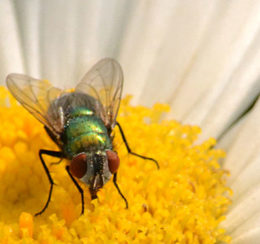
fly on daisy

Tips on gardening for pollinators

When we think of pollinators, we usually think of bees. But any animal that carries pollen from one plant to another as they collect nectar is a pollinator. This includes hummingbirds, bats, beetles and even flies. More than 75 percent of all flowering plants are pollinated by animals. Since this is National Pollinator Week, we’re sharing some gardening tips on how you can help pollinators. This information comes from the New York State Department of Environmental Conservation (DEC) and the…...

Membership Required

You must be a member to access this content.

View Membership Levels

Already a member? Log in here