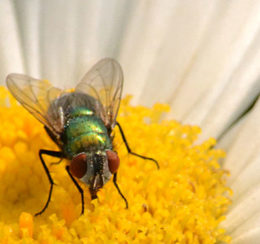
fly on daisy

Tips on gardening for pollinators

When we think of pollinators, we usually think of bees. But any animal that carries pollen from one plant to another as they collect nectar is a pollinator. This includes hummingbirds, bats, beetles and even flies. More than 75 percent of all flowering plants are pollinated by animals. Since this is National Pollinator Week, we’re sharing some gardening tips on how you can help pollinators. This information comes from the New York State Department of Environmental Conservation (DEC) and the…...

Membership Required

You must be a member to access this content.

View Membership Levels

Already a member? Log in here
daylily 'Princess Diana'

How to make daylilies look great for visitors; garden walk season begins

by Connie Oswald Stofko Garden walk season in Western New York starts this weekend with the Lewiston GardenFest–see details below. If you’re sharing your garden on a garden walk, or just plan on having folks over for a barbecue, here’s a tip on daylilies that will make your gardens look pretty. Liveheading daylilies If you want to make your landscape look attractive for visitors, here’s a tip for daylilies from Kathy Guest Shadrack, who does communications for the Buffalo Area…...

Membership Required

You must be a member to access this content.

View Membership Levels

Already a member? Log in here
reuse plastic container to protect garden plants

Can’t recycle those items anymore? Use them in your garden

by Connie Oswald Stofko Now that we can’t recycle as many kinds of items as we did before, can we find ways to reuse them in our gardens? We already use lots of odds and ends in our gardens, but today let’s reach a little higher. Let’s look specifically at items that you can’t recycle anymore — items that get thrown in the trash and end up in a landfill. And let’s look at things that you were throwing into…...

Membership Required

You must be a member to access this content.

View Membership Levels

Already a member? Log in here
monarch caterpillar

If you want butterflies, garden for caterpillars

If you want butterflies to stick around your garden longer, it’s not enough to think about gardening for butterflies. You need to think about gardening for caterpillars, too, said David O’Donnell of Eastern Monarch Butterfly Farm. You can find his article and more in the Spring 2019 edition of the Pollinator magazine. It is published by the Pollinator Conservation Association, which is based in Western New York. Butterflies have a mission, O’Donnell explained. In addition to keeping themselves nourished by…...

Membership Required

You must be a member to access this content.

View Membership Levels

Already a member? Log in here
horse in Western New York

Can horse manure keep deer away from your garden?

by Connie Oswald Stofko I don’t get deer in my yard, so I haven’t tested whether horse manure might keep deer away. But I know how desperate Western New York gardeners get when it comes to deer, so I figured I should pass along any tip that might help. I got this information from a blog post by Joyce Tomanek on Mother Earth News that was published in 1999. Tomanek lives in the Southeast, which may (or may not) make a difference…....

Membership Required

You must be a member to access this content.

View Membership Levels

Already a member? Log in here
lone star tick

Watch out for scary new tick, plus update on lily beetle

Two invasive insects — one that can make you sick and another that damages your lilies— are discussed in this month’s WNY Gardening Matters. The publication is produced by the Master Gardeners of Cornell Cooperative Extension in Erie County. Lone star tick The lone star tick (Amblyomma americanum) is a scary tick that is now in New York State, according to Lyn Chimera in this article. The bite of the lone star tick can trigger a very dangerous syndrome called…...

Membership Required

You must be a member to access this content.

View Membership Levels

Already a member? Log in here
flower twist tied to a stake

How to properly stake a flower

Some flowers, such as delphinium, may need support so they stand up straight and won’t break in a strong wind. Jen Weber, vice president and manager of Mike Weber Greenhouses, gives us tips on how to do it properly. Start with a bamboo stake that is taller than your flower. (You can get bamboo stakes at Mike Weber’s.) When you’re placing the stake, make sure you’re not too close to base of your plant. The stake should be at least…...

Membership Required

You must be a member to access this content.

View Membership Levels

Already a member? Log in here

North Tonawanda Botanical Garden shares tips on standing water & more

by Connie Oswald Stofko How can you deal with standing water in your yard? What can you plant to attract birds and butterflies? The North Tonawanda Botanical Garden Organization wants to share what they know about these topics and more. “Our ultimate focus is community education,” said Laura Pecoraro, secretary. The group, which became a nonprofit in July 2018, is in its fourth year of rehabilitating a long-neglected park. It’s located at 1825 Sweeney St., North Tonawanda, along the Tonawanda…...

Membership Required

You must be a member to access this content.

View Membership Levels

Already a member? Log in here
grass growing among perennial plants

How do you get grass out of your garden? Please tell us your tips!

by Connie Oswald Stofko A gardener recently asked me how he could get grass out of his garden beds. It’s so difficult, he said, because when you pull up on the grass, you may think you’ve got it all, but the root just keeps going and going. All I could do was commiserate. I have stones lining my garden beds in an attempt to keep the lawn on one side and the garden beds on the other, but it doesn’t…...

Membership Required

You must be a member to access this content.

View Membership Levels

Already a member? Log in here

How to dispose of invasive or dangerous plants

by Connie Oswald Stofko In response to a previous article on lesser celandine, an invasive plant that can take over your yard, a reader left a comment with this question: What to do with the dug ups??? Same problem I have when removing poison ivy. Where can you put it that it doesn’t cause more problems? The best way to dispose of invasive plants or dangerous plants is to carefully place them in a plastic bag and set the bag…...

Membership Required

You must be a member to access this content.

View Membership Levels

Already a member? Log in here