

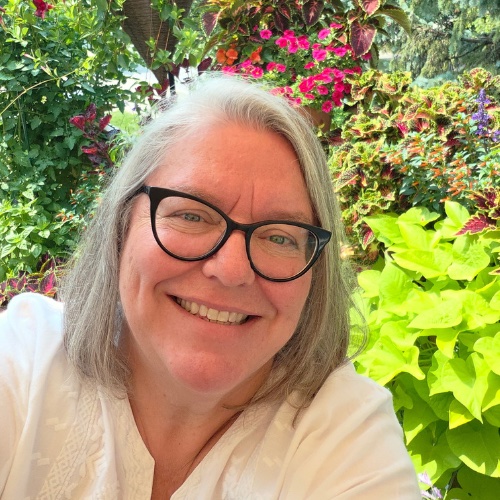
Patti Jablonski-Dopkin, Urban Roots’ outgoing general manager, reflects on her career and on the past, present, and future of WNY gardening.
By Lauren Newkirk Maynard
Patti Jablonski-Dopkin knows plants. She has been at the helm of Urban Roots Cooperative Garden Market as general manager for 17 years and has worked as a horticulturist for 47.
A Philadelphia native, Patti was instrumental in transforming what she called a “funky little plant store” into a thriving member-owned shop and nursery. She helped set up long-running programs and partnerships with Grassroots Gardens and Massachusetts Avenue Project to deliver free, public gardening classes, and with her board of directors and staff, grew Urban Roots into a go-to source for garden design advice and products in Buffalo.
She also lends her talents to landscape projects at the Robert T. Coles House and Studio, and Freedom Park, both important local sites for African-American history and culture.
In January, Patti will step down from her role, although she isn’t done with gardening and will continue to work with the two historical sites. She recently sat down with BNG to talk about her career and what her legacy at Urban Roots means to her, and to the Buffalo community.
Buffalo-Niagara Gardening.com: Growing up, how did you develop a love of plants and nature? What kinds of jobs did you have before working at Urban Roots?
PJD: My mother always had houseplants. We also grew vegetables in a victory garden because she had one growing up. It was just a way of life for us to have plants around. Then we moved to Buffalo at the end of my high school year. I didn’t really like school, so I went into the local BOCES horticulture program. I started working at Seville’s in Orchard Park, in their garden center and greenhouses, and then in the flower shop.
What brought you to Western New York?
We moved here in May, 1977. My father was a beer distributor in Philadelphia. His brother had settled in Buffalo and ran his own beer distributorships, and he asked my father to help him. So we moved to Buffalo. After my son was born, from the time he went to kindergarten until he was in second grade, I worked for the family business.
What’s your horticultural training?
I went to SUNY Alfred State for horticulture and business, and then went into floriculture, running a flower and design shop. I went down to Washington D.C. and worked at Nosegay Flower Shop, where we did all the flowers for George W. Bush, who was Vice President at the time. We got to do all the big parties in Washington and meet interesting people. Then I came back up to Buffalo, and worked in flower shops and greenhouses.
What experiences best prepared you for your job at Urban Roots?
All of them did. My sister-in-law and I had a retail children’s clothing store for a while, and when the Urban Roots role came up, I felt like all the jobs in horticulture and in business led me to this position. It was just great timing.
How did you first get involved with Urban Roots?
We sold the beer distributorship, and I was like, okay, I’m in my 40s, I have to find a job. My sister-in-law, who was president of Lexington Co-op, was instrumental in helping Urban Roots form a co-op.
Tim Bartlett, who was on their [search] committee, mentioned the job to her, and she said, I think I have somebody that’ll work perfectly for you.
I thought, okay, this is a funky little garden center, and this could really become something. I saw it as a blank canvas, to be able to have fun growing this business in a field that I have always been passionate about. I was hired in 2009.
“I’ve been in this industry now for almost 50 years, and I am still learning things, still learning a nuance of a plant.”
Following the pandemic houseplant boom, there still seems like plenty of room for “funky little plant stores” among the larger, more comprehensive nurseries. Why do you think this is?
There’s definitely room for everybody to have their own little niche. It was interesting because we had a good ride during the pandemic and the year after that, but then the following year there was a real drop, and I think it was because a lot of people didn’t realize that there’s actually work involved and time involved in taking care of a living plant. I think people went in gung ho, and then realized, oh, I really have to make an effort here. So we definitely lost some people, but I think some really enjoyed it and have gotten emotional and physical positive reinforcements out of growing plants.
What is Urban Roots’s niche?
I think our niche is that people know they can come to us for solid information. We’re not a hard-sell business. We’re not trying to sell three trowels and a shovel for you to plant a four-inch pot. We really like to take the time to know our customers, find out what their goals are, and help them be successful.
We have people come in and say, ‘I read this on the internet,’ and I’m like, ‘Yeah, that’s for if you’re in Arizona, and you’re in Buffalo.’ We can provide information about our area and our seasons and how plants react to them.
When I hire people, my number one rule is: if you’re asked a question and you don’t know the answer, no BS answers. We’ll research it and we’ll get back to them.
What makes urban gardening uniquely challenging, and rewarding?
It’s rewarding showing people container gardening and vertical gardening, and seeing the satisfaction that they have being able to produce vegetables and herbs, or beautiful containers. I think the challenge is the smallness. For instance, we’d love to carry big trees, but we know that there are already a lot of big trees in this city. So we do more understory and ornamental trees.
How do you balance the store’s quality and quantity?
The year I was here, I was ordering out of a catalog and things looked nice in the book. But when they got here, I was like, ‘Oh my gosh, this is an awful tool.’ So, I’ve all every year I go to the trade shows so I can feel a pruner, see how the mechanics work, or feel a pot to see whether it’s plastic or ceramic. I follow what’s going on in the industry, and it’s important to be able to really see the quality of the products.
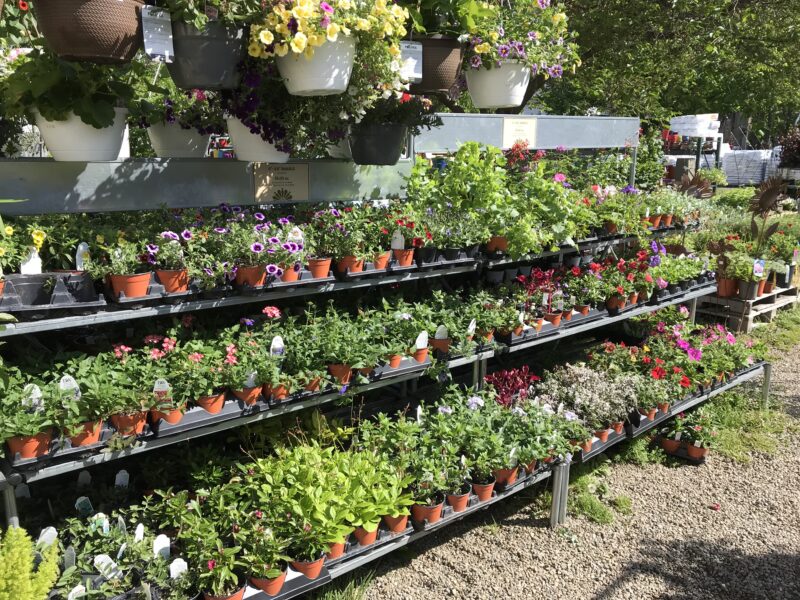
I also don’t carry plants that don’t do well in our area or don’t do well in pots. We try to buy as local as possible. One of the good things about being small is that our turnover is constant and our customers always get fresh plants.
How are local nurseries like yours responding to the climate crisis?
I play it carefully, especially with trees and shrubs, because we have such unpredictable winters. I try not to bring in Zone 6 trees and shrubs, because I want to make sure they can survive down at least two zones. I don’t bring plants in until it’s time ready to plant them, and they can take the temperatures. People are always looking for everything mother by Mother’s Day, but we remind them, it has snowed on Mother’s Day.
People get very eager.
I mean, in January and February, people come in asking us where our tomato starts are. And I say, what are you gonna do with them?
What is Buffalo buying today that they weren’t asking for 10 or 15 years ago?
Customers have been looking for lawn alternatives and lawn additions. People are looking for white clover, self heal, creeping thyme and micro clover to replace or add to their existing lawns. The detriments of having a pristine lawn have been recognized, and folks want to do good for the earth, for beneficial insects, and for their own green space.
Are there plants that you wish people would stop requesting?
While I am always on the look out for new plants that will grow well in our Buffalo climate and try to bring in plants that people are looking for, I wish people would not automatically ask for the plants they see on the internet that are AI generated. I know that new gardeners get excited about plants and may not know what the reality of certain plants are, but if they look unbelievable, there is usually a reason. The red and white hostas as big as a hydrangea, the purple and turquoise elephant ears that supposedly grow 20 feet. Plants like those.
What gardening advice have you changed your mind about over the years?
I do not freak out if everything isn’t planted by Memorial Day. It should all be planted by the second week in June. Because of our weather and because of our beautiful fall, I feel like it’s better to wait and be successful than to rush it and fail. I don’t want our customers to have to buy a plant twice.
How do you respond to the opinion that gardening is an expensive hobby?
It absolutely can be, but that kicks it back to knowledge. Can you learn how to save seeds and start seeds? Can you learn how to propagate things so that you’re not having to always buy? You can share with friends and family.
I’m also aware and keep abreast of what people are selling and what they’re selling them for, I also know that we’re paying our staff, a fair salary. We are paying our local growers. People go to Home Depot and don’t realize that Home Depot doesn’t pay their growers until they sell it.
I think we have to sometimes give the customer the reality of those two very different situations. Sure, you know, yeah, it might be a buck less at the big box stores, but we’re also keeping the money in our community.
You’ve talked a lot about the success of your free education series, specifically the classes with MAP and Grassroots Gardens. What are some other collaborations you want to mention?
I’m also very proud of our involvement with Freedom Park and the Coles House. I lend our horticulture knowledge to both of those places where they need it, and I know Urban Roots will continue with it. I’ll be involved in my retirement, too.
For Freedom Park, we came in and did a redesign of the park and acknowledged the challenges at the site. We’re on a four- or five-year plan to get that planted properly and beautifully for the community and for the historical recognition.
Same thing at the Coles House; they are in the midst of getting historical acknowledgement, and they want to bring the grounds back to what they were. So I’ve been lending my horticulture knowledge. We’re in a bit of a holding pattern until they get the historical aspect cleaned up, but I’ve gone through some of the notes that Mrs. Coles had about all her gardens.
How does gardening transform a neighborhood, and a city? What do you think gardens and gardeners contribute to a community beyond simply making it look better?
Individually, [gardening] has so many benefits for a person. But then sharing that and building the community, how gardening brings that about, I think, is one of its greatest achievements.
I think it gets people talking by trying to beautify their property and community gardens. It gets neighbors out of their house and talking to one another and sharing their knowledge and sharing their plants.
What do you think is still lacking for gardening in WNY, whether that’s education or other resources?
Well, I think education is ongoing. I’ve been in this industry now for almost 50 years, and I am still learning things, still learning a nuance of a plant. Somebody will tell me that, you know, they grew this plant this way and were really successful. And I’m like, oh, I never thought of it that way.
People who have been gardening all their lives are still learning, as are a lot of younger new people who are new to gardening, and that goes back to people being on their phones and screens all the time, and really wanting to drop that and have a connection to the soil, to the earth, to other people.
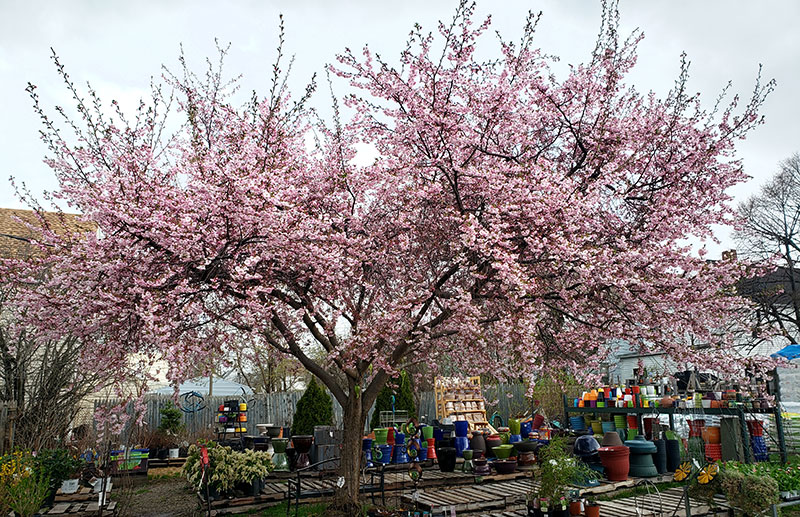
What’s the story behind that enormous cherry tree in the middle of the shop’s yard?
When Urban Roots first opened, they heeled in a Kwanzan cherry tree for the winter [Ed note: heeling is temporarily planting bare root or container plants in a trench or mound to protect them until they can be permanently planted]. By the time I came, the tree had established itself and could not be removed, so I decided to keep it. I figured it would bring some much need shade to the yard.
The tree has grown to be about 25 feet tall and almost as wide. People come from all over to see it and take pictures while it is in bloom. It also houses a variety of beneficial insects that make the tree hum on sunny days. It’s a real treat to sit under it and listen. I look at its beauty in awe, all the time thinking that there is a three-gallon plastic pot down there somewhere with its roots.
What is your advice for the next general manager?
I really hope that the new GM does not come in looking to replace me, but looks to implement their own ideas and strategies to the co-op and continue is success in their own way. I have had a great run at Urban Roots, and feel I have done well by it. Now is the time for fresh eyes and new ideas to continue the success we have built on and bring us to the next level.
Lauren Newkirk Maynard is editor of Buffalo-NiagaraGardening.com.

Patti, it’s been so wonderful working with you! The information that you have explained to gardeners for so many years have helped all of us. Thank you for all you have done!