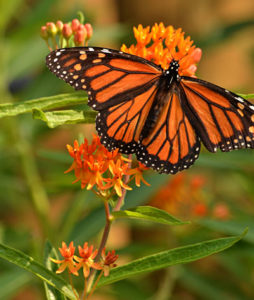
monarch on butterfly weed

30 x 30 Campaign: Takeaways from first meeting; get involved!

by Connie Oswald Stofko Nearly 100 people attended the first meeting on Saturday of the 30 x 30 Campaign for Western New York, which aims to have biodiversity on 30 percent of Western New York land and waters by 2030. (See our previous article here.) You can view the video of the meeting here. (Meetings will be in person only, not online, but meetings will be recorded. I’ll share the recordings here on Buffalo-NiagaraGardening.com.) Even if you couldn’t attend the meeting,…...

Membership Required

You must be a member to access this content.

View Membership Levels

Already a member? Log in here
squirrel at bird feeder in rain in Amherst NY

Count birds & mammals in FeederWatch

FeederWatch is a November-April survey of birds—and now mammals!—that visit backyards, nature centers, community areas and other locales in the United States and Canada.  Despite the name, you don’t need a feeder. All you need is an area with plantings, habitat, water or food that attracts birds.  You can participate from inside looking out a window. The schedule is completely flexible. Count your birds for as long as you like on days of your choosing, then enter your counts online.   The…...

Membership Required

You must be a member to access this content.

View Membership Levels

Already a member? Log in here
logo for Western New York 30 x 30 campaign

30 x 30: You can help our planet right here in Western New York

by Connie Oswald Stofko Is one-third of your yard biodiverse? Does it have native plants and bees and other animals? If not, could you take steps toward more biodiversity? That small idea is just one part of the 30 x 30 Campaign for Western New York, which aims to have biodiversity on 30 percent of Western New York land and waters by 2030. You could help by changing a bit of your yard, or parks in your town, or forests…...

Membership Required

You must be a member to access this content.

View Membership Levels

Already a member? Log in here
spangled fritillary butterfly, red leaf, and bumble bee

Use the leaves, leave the leaves, or rake to curb?

by Connie Oswald Stofko Where do our pollinators go in the winter? A lot of them stay right here in Western New York. You may have created a welcoming habitat for them in spring, summer and autumn with native plants. Now it’s time for us to create a welcoming habitat for them during winter. It’s easy, too! Just leave the leaves. Why leave the leaves? We need pollinators, and pollinators need those fallen leaves in order to survive over the…...

Membership Required

You must be a member to access this content.

View Membership Levels

Already a member? Log in here
bittersweet on tree trunk

Volunteers sought to contain invasive species in Buffalo Olmsted parks

The Buffalo Olmsted Parks Conservancy has created a new Invasive Species Eradication Taskforce. The taskforce aims to make people aware of invasive plant and insect species. The group is looking for volunteers to help the conservancy contain invasive species, and, when possible, eradicate them.   Some of the invasive species the taskforce is looking at are phragmites, bittersweet (Celastrus orbiculatus, also called round leaf, Asian or Oriental bittersweet), buckthorn and spotted lanternfly. “It’s imperative that we make a concentrated effort to manage…...

Membership Required

You must be a member to access this content.

View Membership Levels

Already a member? Log in here
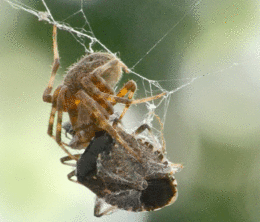
spider captured a brown marmorated stinkbug in Amherst NY

More brown marmorated stink bugs this year? Relax

by Connie Oswald Stofko Last year we got the good news that the population of brown marmorated stink bugs could be declining in Western New York. But I saw more brown marmorated stink bugs this year than I did last year. Did you? Don’t worry. First of all, did you count the stink bugs this year? Or last year? Neither did I. Maybe we had 20 in our house this year and six last year. Is that a big difference?…...

Membership Required

You must be a member to access this content.

View Membership Levels

Already a member? Log in here
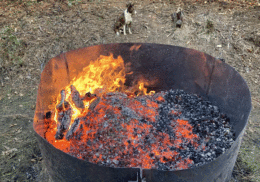
biochar in kiln

Biochar can help your garden soil for eons—learn more at event in Eden

by Connie Oswald Stofko The Amazon basin in general has poor soil, but it has some areas with amazingly fertile soil. Those fertile soils were created thousands of years ago by people using slash-and-burn agriculture. What was left behind from the burned plant material created the soil called terra preta, or black earth. And that soil, thousands of years later, can still be farmed today. Now we’re trying to replicate those fertile soils by using biochar, a kind of charcoal…...

Membership Required

You must be a member to access this content.

View Membership Levels

Already a member? Log in here
Climate change illustration

Speak up on how to spend $4.2 billion in Environmental Bond Act

In 2022, voters passed a $4.2 billion Environmental Bond Act for clean air, clean water and green jobs. What projects will be funded with that $4.2 billion? Don’t leave it up to others; you can have input now. The folks on the Environment Bond Act Listening Tour have been traveling around the state to hear what residents want. If you missed the in-person listening events in Western New York, check out the recording of the virtual event. You will get…...

Membership Required

You must be a member to access this content.

View Membership Levels

Already a member? Log in here
damage on leaf by elm zigzag sawfly

New pest damaging elms in WNY is spreading rapidly; please help

The elm zigzag sawfly (Aproceros leucopoda), an exotic insect pest, has been found this summer in Allegany County and is spreading rapidly through New York State. The elm zigzag sawfly is an insect that eats only elm leaves and can cause severe defoliation (leaf loss) that threatens tree health. It was first detected in August 2022 in St. Lawrence County in the northern part of New York State. This summer it has been found in Allegany, Ontario, Madison, Ulster, Schenectady,…...

Membership Required

You must be a member to access this content.

View Membership Levels

Already a member? Log in here
illustration representing virus

New virus is striking tomatoes & peppers; see more

A virus new to the United States is striking tomatoes and peppers, according to this article by Beth Mattimore in the newest edition of WNY Gardening Matters, produced by the Master Gardeners of Cornell Cooperative Extension in Erie County. Tomato brown rugose fruit virus (ToBRFV) is spread by tomato seeds. There are no current treatments or sprays that will cure infected plants. Tomato production worldwide is threatened. The virus has been seen in other parts of the world since 2015…....

Membership Required

You must be a member to access this content.

View Membership Levels

Already a member? Log in here