


Merciful chops, endless watering and the communal joys of the high season.
By Peggy Koppmann
I’m in the market for a crystal ball. As this is being written at the beginning of June, many national weather forecasts predict a hot, dry summer. By the time you read this in July, gardeners may be praying to the rain gods for help. Now, if we could just find a fortune teller who is also a meteorologist…and a gardener. Happy July!
Make the sacrifice
Many annuals such as petunias and their look-alike cousins, calibrachoa, begin to get leggy by mid-summer. It’s time for sacrificial pruning. Cut back the leggy stems by about a third, water deeply, and fertilize. You’ll miss some flowers for a week or two, but once the plants recover, they’ll look good for the rest of the summer.
For the timid crowd, just prune back a few leggy stems at a time. The resulting look may be a little lopsided, but you won’t lose as many blooms at once.
For the petunia purists out there, check out: https://www.thespruce.com/how-to-grow-petunias-1402893
Garden thieves
We often think of weeds as a nuisance, but they are also thieves, robbing cultivated plants of water and dissolved soil nutrients and affecting the growth and yield of your garden. Taller weeds create shade, which affects photosynthesis in smaller plants and may create a humid microclimate that can result in the spread of fungal disease.
Some weeds such as lambsquarter and crabgrass are annuals, completing their life cycle in a growing season. Removal and preventing them from going to seed are the primary management tools. Others are perennial weeds such as Canada thistle and quack grass, which survive the winter with underground storage tanks in the form of rhizomes, tubers, or taproots. You can remove the foliage, but the weed will regrow from its underground roots; complete removal of the root system is necessary here.
You can also deplete the energy reserves of some perennial weeds by repeatedly shearing off any above ground growth, a strategy that requires complete dedication.
For a comprehensive look at weed management, see https://extension.psu.edu/trees-lawns-and-landscaping/ornamentals-and-floriculture/weed-management
Get in the hydrozone
As we experience warming temperatures, it’s smart to consider the water needs of plants and group them accordingly. Planting sedums next to water-loving hydrangeas, or ferns next to lavender, which is happy in a hot, dry spot, makes watering inefficient and ineffective.
Grouping low-water plants such as sedums, most herbs, and perennials such as Russian sage or California poppies is an effective way to reduce water use and avoid wasting water. Most established shrubs, vegetables, and flowers such as marigolds, geraniums, and daylilies need regular watering but can survive short dry periods. Higher water-need plants include ferns, impatiens, begonias, coleus and many tropical plants.
Consider adding plants with silver or grey leaves, hairy leaves, or waxy coatings that reflect sunlight and reduce water loss. Besides, they make a great addition to the visual appeal of your perennial border.
Take a deeper look here: https://www.bloomingexpert.com/garden/silver-foliage-plants/
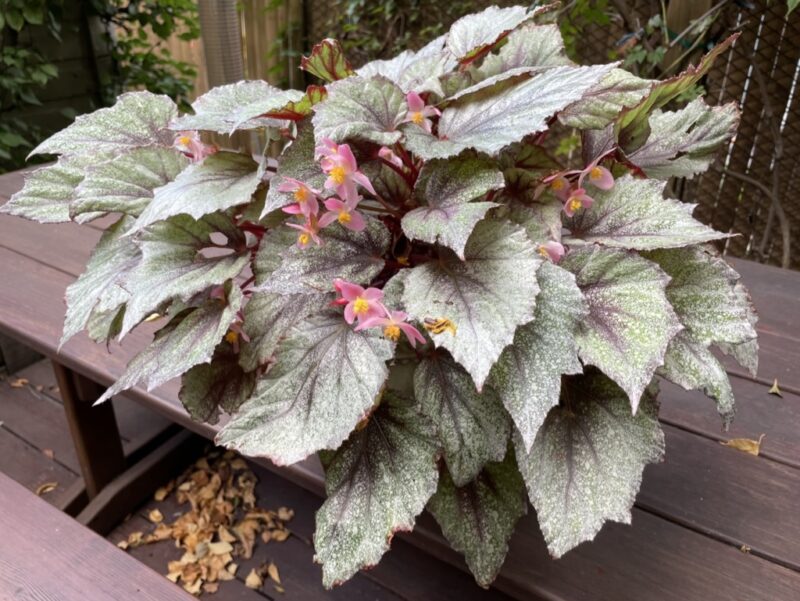
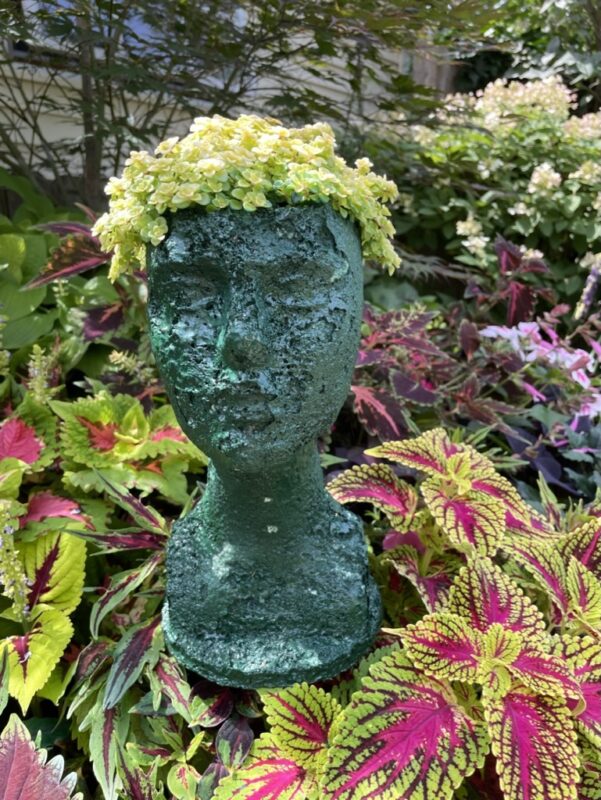
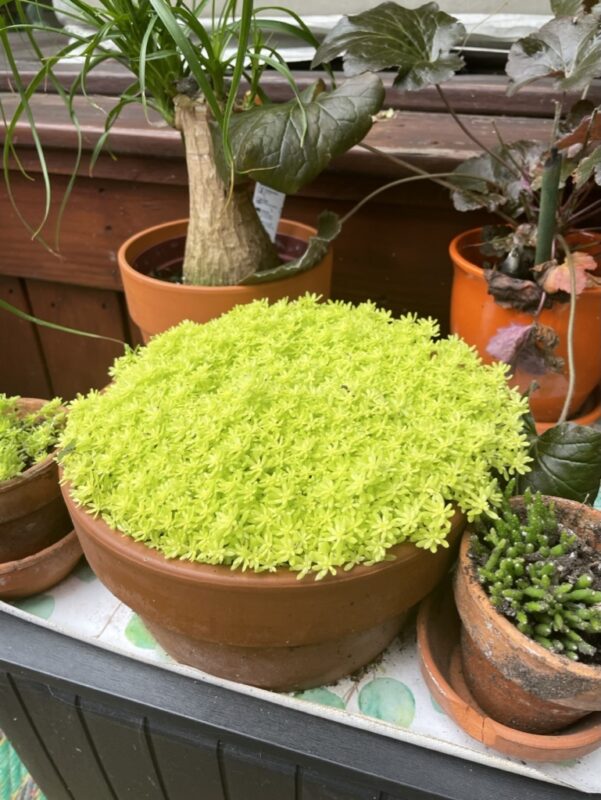
Plants like begonia (left) and sedum (center, in head planter and right, Sedum japonicum ‘Tokyo Sun’, also known as Japanese golden stonecrop) conserve water with silvery, fuzzy or waxy leaves. Photos by Jim Charlier.
Deadheading duties
Many gardeners view deadheading as a chore, but it actually affects the growth cycle of plants. Most flowering plants go through stages of bud development, flowering, pollination, seed formation, and dormancy/death. Pollinators come, the production process begins, and the plant begins to produce seeds.
Deadheading is a signal to the plant to continue blooming rather than to begin producing seeds. Some species, like petunias and geraniums, will bloom continuously throughout the summer if deadheaded regularly.
Deadheading also prevents the accumulation of spent flowers on plants or on the soil which can create an environment conducive to fungal diseases. Airflow through dense plantings is also improved. Think of deadheading as not just a chore, but a choice we make for the health and vitality of our gardens.
Share the wealth
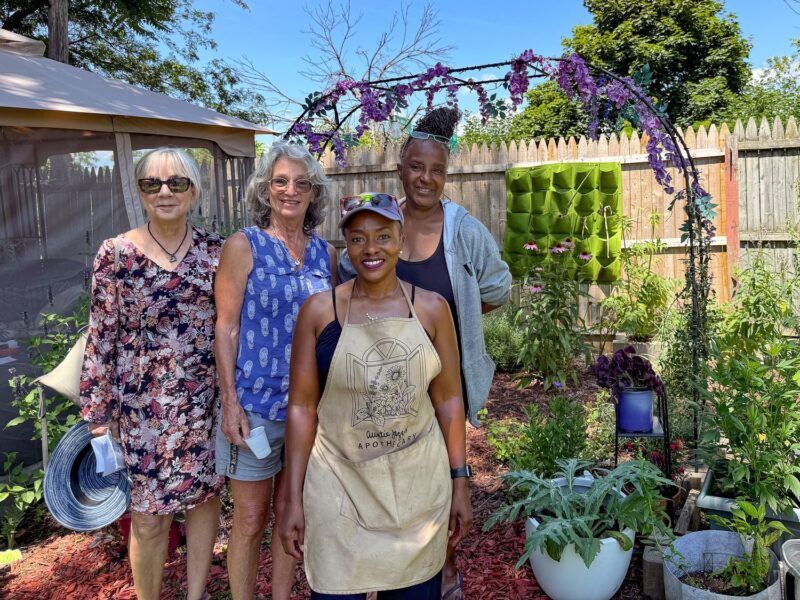
Gardeners in Buffalo and the surrounding areas are the fortunate recipients of an amazingly generous community. We open our gardens for local garden walks and the Open Gardens program. We share stories, plant knowledge, suggestions and encouragement. We commiserate over plants we have killed and rejoice in plants that have survived against all odds. We lament the incursions of deer and rabbits and don’t hesitate to dig up a piece of a favorite plant to share with a visitor.
It’s not just the beauty of the gardens we visit and the inspiration they provide, it’s the camaraderie, the sharing, sense of community that makes July in Buffalo such a special time.
Mark your calendar right now and plan to visit the gardeners who share so generously with us all.
And then…
Remove rose suckers; continue successive vegetable plantings; pick sweet peas regularly to keep them flowering; raise the height of your lawn mower blade; pinch basil stems to prevent flowering; prune maples and birches; harvest regularly; let your lawn go dormant; fertilize roses; prune raspberry canes; watch for blossom end rot on tomatoes; harvest garlic when the leaves are yellowing; don’t pinch back mums after July; enjoy the joys of July.
Peggy Koppmann is a Cornell Cooperative Extension Master Gardener Volunteer and a longtime contributor to CCE Erie’s newsletter, Gardening Matters (and to this website).
