

By Lauren Newkirk Maynard
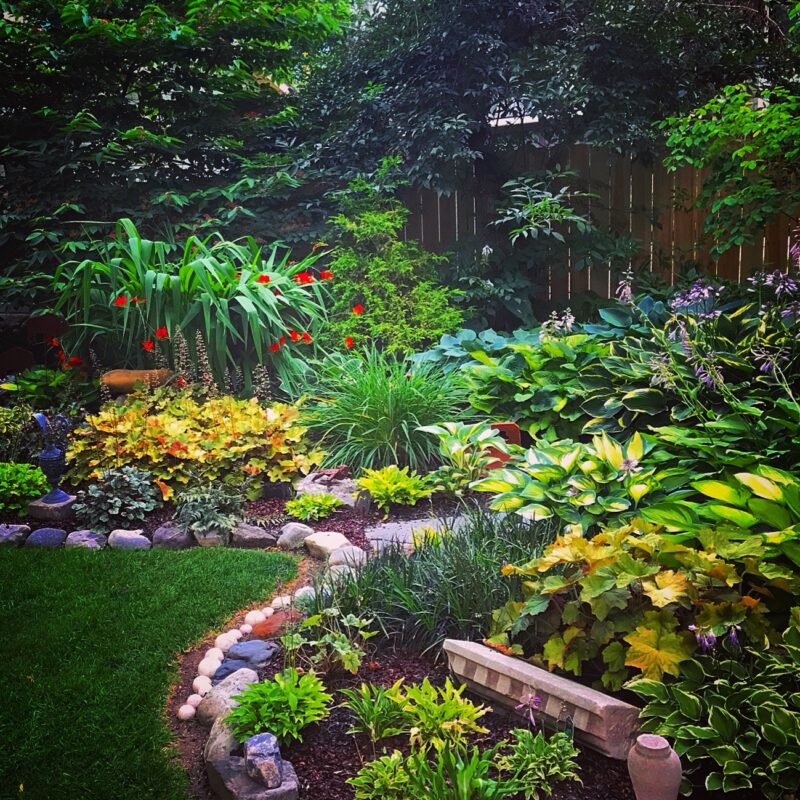
In my shade-loving, woodland-ish city yard, perennials rule. The plants popping up every year, and sometimes every other if biennial, delight me with their determination and consistency.
Perennials can be workhorses in the garden, battling climate change, drought, soggy rain and certain pests (deer and rabbits, we see you). They can be grown in all levels of sun and shade, and provide blooms for cut arrangements or interesting foliage in shady spots. They can also help support pollinators like bees, birds and butterflies, providing biodiversity, seed pods for winter food and year-round appeal.
They also stump us, especially each spring. Is it dead, or did I move it? Is this a weed, or is it the columbine my neighbor dug up for me last fall? What companion plants are best with this heuchera? Should I try natives this year (that’s a whole other can of beans) or find some nursery stalwarts?
The best source of information and advice (other than here) is your local nursery. Don’t be afraid to ask questions.
At Mischler’s Florist and Greenhouses, vice president Mark Yadon has options and opinions about what’s hot this year. Natives, yes, which are difficult to source and seed, he says. As a smaller, local nursery seeding most of their stock themselves, Mischler’s finds growing enough natives to keep up with demand hasn’t proven to be a good investment yet. We have thoughts on this, so stay tuned.
Here are some more common herbaceous perennials that Mischler’s recommends for Western New York:
For color and pollinator power:
- Butterfly weed (asclepias tuberosa) – a hardy, bright orange perennial that attracts monarch butterflies and tolerates poor, dry soils. All of the aclepsias, or milkweed, will support other pollinators, too.
- Catmint ‘Walkers Low’ (nepeta racemosa), which Yadon suggests pairing with ‘Stella De Oro’ daylily
- Hyssop (agastache) – a strong seller that pollinators love, it’s most commonly blue but also appears in red, yellow and orange cultivars
- Cardinal flower (lobelia cardinalis) This tall, bright red hummingbird favorite is native to North America. It likes moist soil but tolerates sun and shade, and is a great late-summer bloomer. Lobelias are a huge group of tender perennials and come in lovely blues and several other colors.
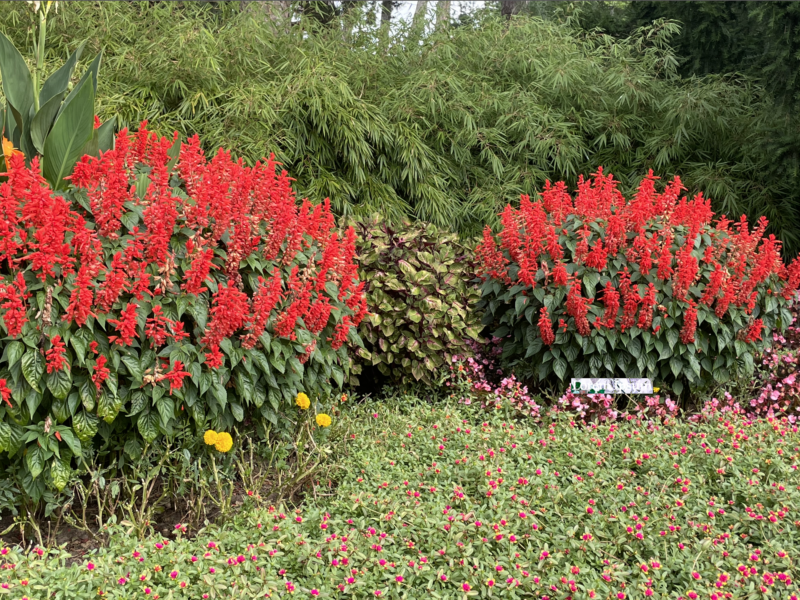


From left to right: Cardinal flower provides a tall pop of scarlet; butterfly weed with Russian sage pair well in a sunny garden and are pollinator-friendly; hyssop (agastache) attracts hummingbirds and is fragrant, too. Photos by Jim Charlier and Connie Oswald Stofko.
For texture:
- Artemisia – a huge genus of almost 500 plants, artemisia includes species with common names like silver mound, mugwort, wormwood and sagebrush. They’re hardy and, like silver mound’s soft, silvery foliage, create incredible texture and non-flowering interest.
- French lavender (lavendula dentata) – this perennial favorite (sorry) requires good drainage and can be difficult to establish in our local clay, but it can be worth amending the soil for the bees and humans.
- Grasses – Plant them by height first, Yadon says. Try blue fescue, a ubiquitous, drought-tolerant grass with striking blue-green foliage. If you want a native grass, Mischler’s has northern sea oats (hasmanthium latifolium), a flat-leafed, yellow-green perennial that self-seeds and does well in sun or shade. “You’ll have to keep an eye on it so it doesn’t spread,” he says.
Specialty perennials, pricier but prized by many gardeners, include shade-lovers brunnera, lungwort, ferns, and the slow-growing but gracious hellebore, which Mischler’s can’t keep in stock, it’s so popular this year. Call ahead and see what nurseries have.
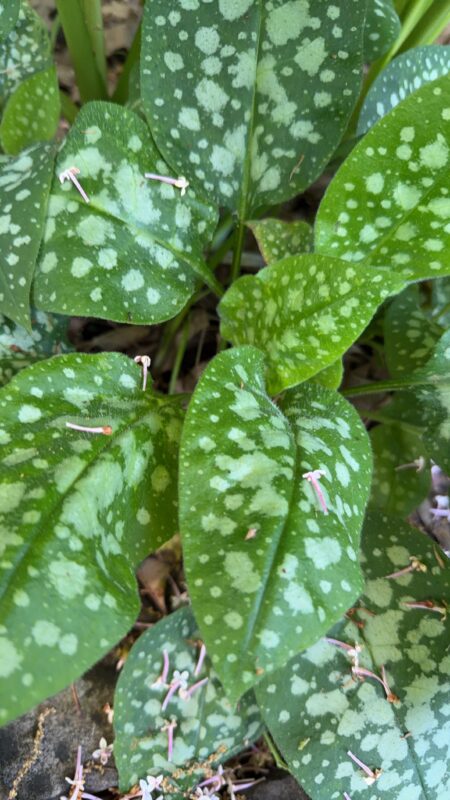
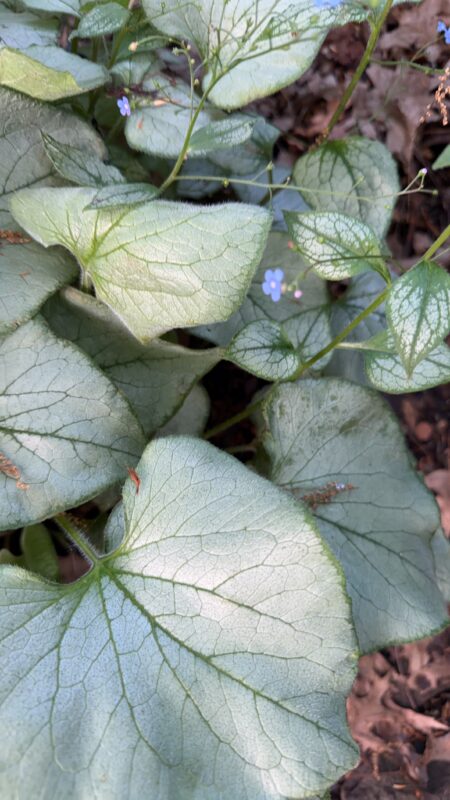
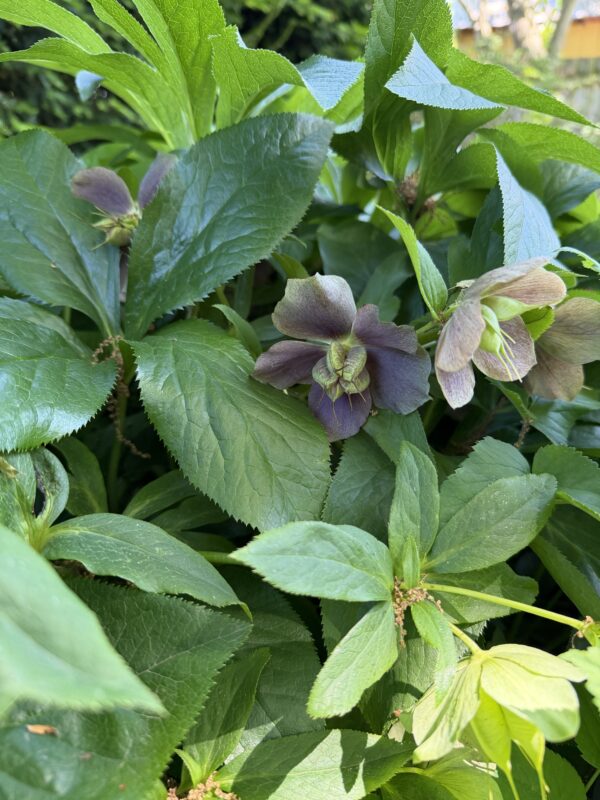
Lungwort, hellebore, and brunnera all make fantastic ground covers and are specimen plants to show off in your shade garden. Photos by Lauren Newkirk Maynard
I’m trying lamium (spotted dead nettle), a tough, often variegated or dappled groundcover with perky purple flowers that works well in dry shade.
Word of warning: some types of perennials, like some lamium, are considered invasive depending on where you live. Check WNY’s local registry of invasive plants to avoid those species.
Norm Cudeck, a Tonawanda-based landscape contractor, was at Mischler’s hunting down some artemisia stelleriana (Dusty Miller) he found there last year. “I love this stuff, I need more of it!” he said. Yadon informed him there wasn’t much in stock or on order right now (nurseries like Mischler’s often rotate what they order from year to year, depending on what’s readily available). “Oh well, I’ll just try again next year,” Cudeck said cheerfully. “There’s always something else to buy.”
As for me, I’ll keep sprinkling cayenne and putting cages over my new miniature hostas and hoping I’ll see them again next year.

Naming names
Carl Linnaeus (1707-778) was a Swedish botanist who founded modern binomial nomenclature—the naming of plants and other living things. In his seminal book Species Plantarum (1753), Linnaeus came up with the symbol ♃, also the symbol of Jupiter, to help differentiate perennial plants from other botanical types. Like Carl, you could jot this symbol, or just their common names, on a marker by your new perennials until they establish, and continue to enjoy these plants as long-term investments in your garden landscape.
Lauren Newkirk Maynard is a home gardener, writer and editor of Buffalo-NiagaraGardening.com.


I like the stick trick, Connie! When I get plants from the Master Gardener sale, I always keep the tags and put them in the ground next to the plant.
I always think that, in spring, I will recognize which plants are perennials and which are weeds, but every year I get confused. Sometimes I place a plant tag by my perennial, but in spring, the tag has fallen over and I don’t know which plant is the perennial and which is the weed. Here’s one tip that helped me. Last autumn, I planted a new perennial, then surrounded it with plastic utensils, craft sticks and old plastic plant tags. Even if I didn’t remember what perennial it was, when I saw the circle of sticks around the plant, I knew it was something that I wanted to keep!