Be a citizen scientist in Western New York: Help track squirrels & birds, take a survey & more

You don’t have to have a college degree to help advance scientific learning in plant and nature topics. You can help scientists collect data on a number of local and national projects. Here are a few projects that might interest you. __________ Let scientists know where squirrels are & where they aren’t Take a look around your home, office, school or other location and, whether you see squirrels or not, enter your observations at the Project Squirrel website. Scientists want…...

Monthly Subscription Membership Required

You must be a Monthly Subscription member to access this content.

Join Now

Already a member? Log in here
herb garden at Buffalo Niagara Heritage Village

Get tips from history to deal with a combination of dry and wet conditions in your garden

by Connie Oswald Stofko A combination of gardening problems faces Buffalo Niagara Heritage Village, the 35-acre historical interpretive center in Amherst that showcases 19th century buildings set up like a village. Much of the landscape is boggy, so gardens can be wet early in the season. In addition, there’s no irrigation system, and hoses can’t reach all the gardens, so there’s no easy way to water plants during the dry summer months. To deal with these conditions, Buffalo Niagara Heritage…...

Monthly Subscription Membership Required

You must be a Monthly Subscription member to access this content.

Join Now

Already a member? Log in here
spotted wing drosophila courtesy Cornell Cooperative Extension

Mushy fruit? You might have invasive fruit fly called spotted wing drosophila

by Connie Oswald Stofko If you’re having problems with your fruit this year, it might be due to an invasive fruit fly called the spotted wing drosophila. The fruit fly is in Western New York. Cornell Cooperative Extension representatives in Erie, Niagara and Chautauqua counties told me it has been found those counties, and it has been found in other counties as well. One of the biggest tell-tale signs of damage from the spotted wing drosophila is beautiful looking fruit…...

Monthly Subscription Membership Required

You must be a Monthly Subscription member to access this content.

Join Now

Already a member? Log in here

Pool owners: Help save trees from the invasive Asian longhorned beetle

Pool owners can participate in the third annual Asian longhorned beetle (ALB) Swimming Pool Survey now through Aug. 29 to help detect these exotic, invasive beetles before they cause serious damage to our forests and street trees. The survey is held by the New York State Department of Environmental Conservation (DEC) at this time of year when ALBs are expected to become adults, emerge from the trees they are infesting and become active outside those trees. ALBs are originally from…...

Monthly Subscription Membership Required

You must be a Monthly Subscription member to access this content.

Join Now

Already a member? Log in here

Dangerous plant: Do not touch giant hogweed! It can cause severe burns and blindness

by Connie Oswald Stofko I saw giant hogweed in Niagara County several years ago. It was about four feet tall and I thought it was an overgrown Queen Anne’s lace. Boy, am I glad I didn’t go near it! Its sap, in combination with moisture and sunlight, can cause severe skin and eye irritation, painful blistering, permanent scarring and blindness. This is a seriously dangerous plant. The plant has been identified in every county in Western New York. See a…...

Monthly Subscription Membership Required

You must be a Monthly Subscription member to access this content.

Join Now

Already a member? Log in here
Impatiens courtesy Margery Daughtrey

Update: Impatiens might do okay in WNY this year, or they might not

by Connie Oswald Stofko If this summer is like last summer in Western New York, you might be able to plant impatiens and have them perform well, perhaps into August, anyway. But there are still a lot of ifs involved, and there are certainly no guarantees. Margery Daughtrey, senior extension associate with Cornell University who co-wrote a fact sheet on how downy mildew affects impatiens, gives us an update on what Western New York gardeners might expect from impatiens this…...

Monthly Subscription Membership Required

You must be a Monthly Subscription member to access this content.

Join Now

Already a member? Log in here
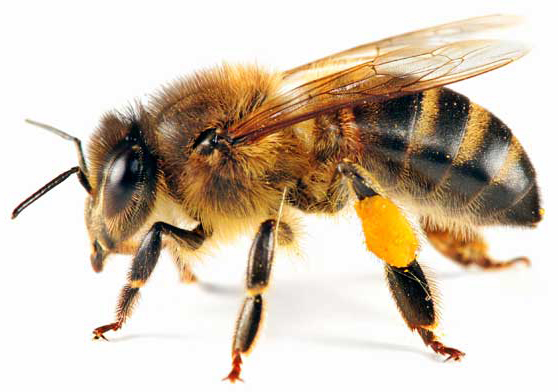
bee from Buffalo and Erie Botanical Gardens

You can help protect bees from toxins; learn more at Honey Bee Festival

by Connie Oswald Stofko Let the clover and dandelions grow in your lawn. Minimize your pesticide use, too, especially on flowers that are attractive to honey bees. Those are ways gardeners can help with the problem of Colony Collapse Disorder, said Reed Johnson, assistant professor in the Department of Entomology at the Ohio State University. Dr. Johnson will speak at 11 a.m. Saturday, May 3 at the Honey Bee Festival at the Buffalo and Erie County Botanical Gardens, 2655 South…...

Monthly Subscription Membership Required

You must be a Monthly Subscription member to access this content.

Join Now

Already a member? Log in here

Two new emerald ash borer infestations confirmed in WNY

Recent detections of trees infested with Emerald Ash Borer (EAB) in Angola (Erie County) and Fredonia (Chautauqua County), both near the NYS Thruway, remind us that we need to continue to prepare for the eventual spread of this devastating invasive insect, according to Cornell Cooperative Extension. The Chautauqua detection is the first reported find of EAB infested ash trees in that county, according to the New York State Department of Environmental Conservation (DEC). A free information session on the EAB…

Help a reader: What is this awful plant?

by Connie Oswald Stofko A reader sent me this question: “I have what I assume is a weed every year in one garden bed. I cannot get rid of it no matter what I try. It is green leafed and grows on a stem that snakes under ground. The stem is reddish purple under ground and the leaves come up from that as it spreads all over. It can get very tall. It’s coming up already. It twists through my…...

Monthly Subscription Membership Required

You must be a Monthly Subscription member to access this content.

Join Now

Already a member? Log in here

Learn more about invasive species during monthly teleconferences, videos

You can find information on invasive species through the 2014 New York State Invasive Species Speaker Series organized by Partnerships for Regional Invasive Species Management (PRISM). Selected recordings can be found at the  NY Invasives You Tube Channel. People who don’t feel tech savvy may feel most comfortable accessing the information there. If you’re a little more confident when it comes to technology, you may want to sit in on one of the monthly teleconferences. You’ll find information on how…...

Monthly Subscription Membership Required

You must be a Monthly Subscription member to access this content.

Join Now

Already a member? Log in here